A proper Paint Protection Film installation starts before the vehicle reaches the workshop. Paint Protection Film is a clear protective film fitted over painted surfaces to help reduce exposure to road debris, sand abrasion, UV exposure, and minor surface scuffs. In UAE conditions, preparation matters because sand can sit in panel gaps, intense sun reveals finish defects, and stone chips often affect front-end panels. A pre-installation inspection records the paint condition and identifies contamination, repairs, and accessories that may need attention before fitting.
PPF is not a repair method. It won't reverse chips in the finish, peeling clear coat, dents, or poorly cured repainting. Those issues need to be discussed before film installation begins.
Wrapping & PPF: what PPF is and why preparation matters in the UAE
Paint Protection Film refers to a transparent film applied to painted exterior panels. It is designed to help protect the original finish from the wear associated with driving, including sand, UV exposure, road debris, and stone chips.
Dubai driving conditions can expose exterior panels to fine sand, particularly around door edges, grilles, wheel arches, and lower bumpers. If that contamination remains in place, it can affect the preparation work and the finish around panel edges.
PPF preparation improves the starting condition of the vehicle. It allows the PPF installer to assess the paint, identify existing defects, confirm the coverage scope, and clean areas that must be accessible during fitting.
DEIZ GARAGE offers Wrapping & PPF. This includes full vinyl, styling, and branding wrap work alongside Paint Protection Film. These are different types of work, even where they involve film. PPF is selected for paint protection rather than a colour or branding change.
How to choose a PPF installer in the UAE
Choose a PPF installer that can document the product, the fitting environment, the agreed panel coverage, and the condition of the vehicle before work begins. For a premium, sports, or collector car, confirm the vehicle-condition record, panel coverage, exclusions, and collection process before work begins.
Ask to see manufacturer training records, installer certification, or authorisation where the film manufacturer offers it. The paperwork should relate to the specific product being proposed, not merely to a brand name displayed on a wall.
| What to check | What to ask the installer | Why it matters |
|---|---|---|
| Film product | Ask for the product line, finish, and warranty terms in writing. | Film names alone don't confirm which product will be installed. |
| Brand documentation | XPEL and 3M are examples of brands an owner may ask the workshop to document. | A recognised brand is not a guarantee unless the product and scope are confirmed. |
| Climate-controlled facility | Ask whether fitting is completed in a climate-controlled installation bay. | Heat, dust, wind, and airborne sand can affect the working environment. |
| Vehicle portfolio | Request examples of comparable luxury, sports, high-performance, or collector vehicles. | Complex bumpers, carbon components, and aerodynamic parts require careful planning. |
| Coverage plan | Confirm covered panels, exclusions, seams, and edge wrapping before handover. | The agreed scope determines what the fitting team will install. |
| Paint assessment | Ask how pre-existing chips, repainting, scratches, and repaired areas will be recorded. | Film installation does not erase existing surface defects. |
According to the DEIZ GARAGE About page, DEIZ GARAGE serves luxury, sports, and high-performance vehicles and completes this work in-house. Still, the owner should confirm the assigned technician, the agreed scope, and the collection process for the individual vehicle.
A common mistake is treating PPF as a product purchase. It isn't. The result depends on product selection, paint condition, panel access, and the fitting process.
Inspect the paint and decide whether correction is needed
Inspect the paint before confirming the installation date. Look at the front bumper, bonnet, front wings, mirrors, side skirts, door edges, rear arches, lower doors, and areas around badges under strong lighting.
Report visible stone chips, deep scratches, swirl marks, water spotting, staining, peeling paint, lacquer damage, and repaired panels. Photograph anything that could later be mistaken for an installation issue. Take close-up photographs before handover; they provide a clear record of pre-existing paint condition.
Paint correction refers to polishing work intended to improve visible paint defects. Surface cleaning removes dirt and residue. They are related, but they are not the same job.
| Paint condition | What to discuss before PPF installation |
|---|---|
| Light swirl marks or dullness | Whether paint correction is appropriate before fitting film. |
| Chips or deep scratches | Whether repair or touch-up is needed first, and how the area will be documented. |
| Repainted panel | When the panel was painted and whether the finish has fully cured. |
| Peeling or unstable paint | Whether the panel is suitable for film installation. |
| Existing coating, wax, or sealant | Whether it must be removed during preparation. |
DEIZ GARAGE offers Detailing. According to the DEIZ GARAGE Detailing service page, agreed paint-correction work uses RUPES tools. That gives an owner a practical route: inspect first, agree the work second, and fit film only when the paint condition is understood.
Wash the car before the PPF appointment
Wash the car only after asking the PPF installer whether they want it cleaned before arrival or prefer to manage preparation in-house. Most facilities still need to carry out their own inspection and surface preparation, even when a vehicle arrives clean.
If the workshop asks you to wash it, remove loose dirt, sand, road film, and visible residue from the exterior. Pay close attention to wheel arches, grilles, panel seams, badges, mirror housings, number plate surrounds, and door shuts.
Avoid applying wax, sealant, tyre dressing, oily trim products, or quick-detail sprays immediately before the appointment. Those products can leave residues that need to be removed before fitting.
Avoid additional chemical treatments before the appointment unless the fitting team instructs you to use them.
If the installer asks you to wash the car, use a residue-free wash and leave decontamination and final panel preparation to the fitting team unless it gives different instructions.
Remove or disclose items that can affect PPF installation
Disclose every accessory, modification, and non-factory part that may change access to a panel. The workshop needs this information before the vehicle arrives, not after a bumper, badge, or aerodynamic part has become part of the conversation.
Items to remove or discuss include:
- Number plate mounts and non-standard brackets.
- Aftermarket badges, decals, and decorative trim.
- Front splitters, canards, side-skirt extensions, and diffuser parts.
- Cameras, parking sensors, radar covers, and sensor-related accessories.
- Headlight-protection products, protective tape, or old film.
- Repainted panels, bodywork repairs, and non-standard panel alignment.
The owner should not remove badges, trim, sensors, or aerodynamic parts without installer approval. Some components have clips, adhesives, calibration requirements, or paint-sensitive edges. For rare or limited-production vehicles, provide any service notes, parts diagrams, or information about previous bodywork.
Step-by-step checklist: prepare your car for PPF installation
Prepare the car in sequence. This prevents a clean vehicle from arriving with unreported paintwork, hidden accessories, or sand trapped in the places that matter.
| Step | Responsible party | UAE-specific check |
|---|---|---|
| Confirm the coverage scope and handover date. | Owner and fitting team | Confirm whether the car has been parked outdoors in strong sun or dusty conditions. |
| Send photographs of chips, scratches, repainting, and modifications. | Owner | Photograph fresh sand marks, road debris damage, and visible heat-related staining. |
| Complete inspection and diagnostics. | PPF installer | Inspect panel gaps, lower sections, and exposed front-end surfaces. |
| Decide whether paint correction is needed. | Owner and fitting team | Agree this before film installation, not during collection. |
| Wash only as instructed by the workshop. | Owner or fitting team | Clean loose sand from wheel arches, seams, badges, and grilles. |
| Disclose accessories and parts requiring removal. | Owner | Include aerodynamic additions, sensors, cameras, and plate mounts. |
| Confirm scope, estimate, and timeline. | Owner and fitting team | Record agreed panels and edge treatment before work starts. |
| Hand over the vehicle with keys and relevant service information. | Owner | Tell the PPF installer about recent repainting, repairs, or unusual panel materials. |
What to expect during PPF installation
PPF installation should follow an agreed sequence: inspection, vehicle preparation, film fitting, finishing, quality control, and delivery briefing. The fitting team should confirm the vehicle condition and covered panels before beginning.
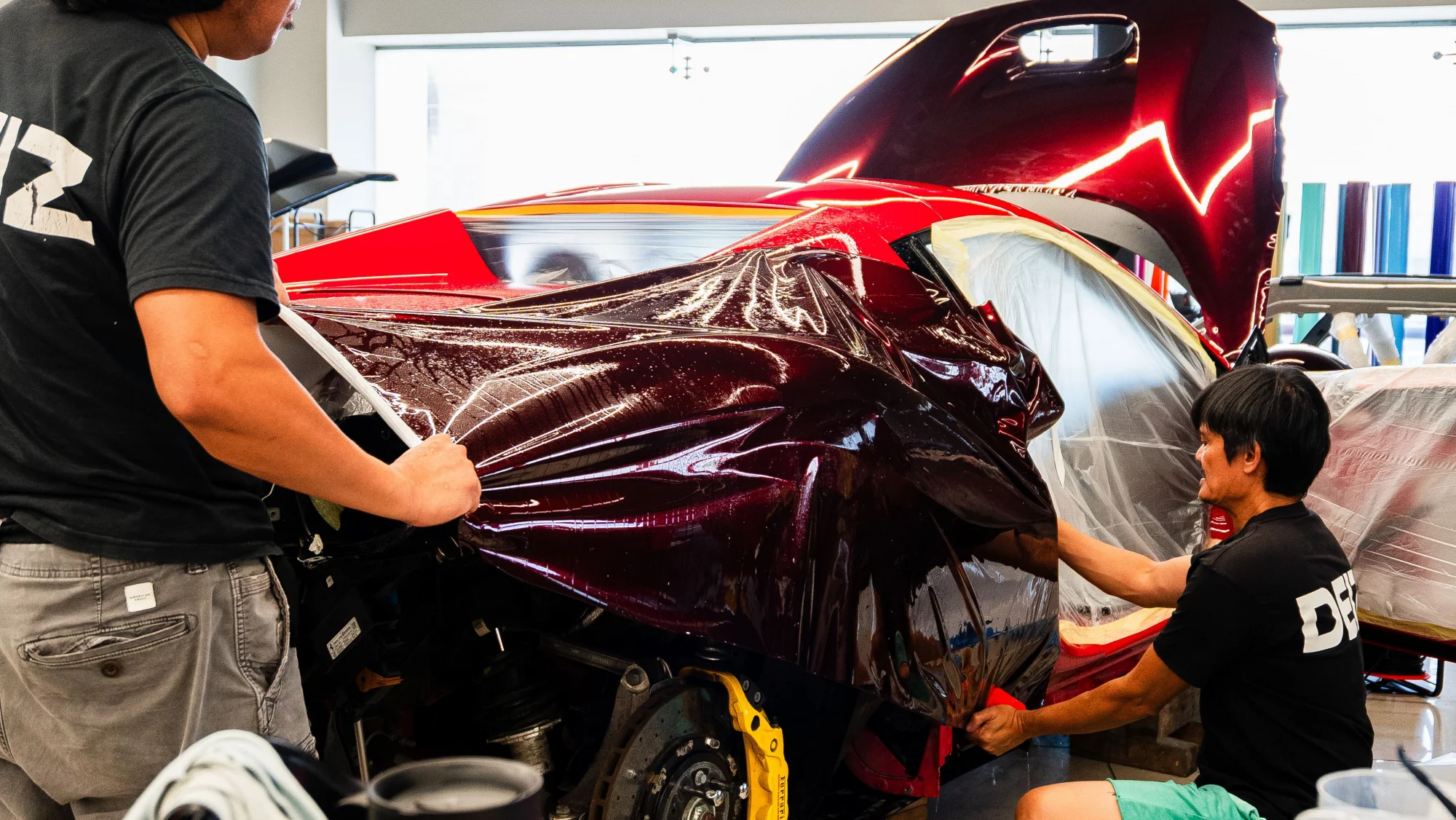
During fitting, the team prepares the relevant surfaces, positions the film, works around approved edges and openings, and completes the agreed finishing work. Edge wrapping refers to extending film around an accessible panel edge where the agreed scope and panel design allow it. It is not automatically available on every component.
At collection, inspect the vehicle with the PPF installer. Check the covered panels, visible edges, areas around badges and sensors, and any concerns recorded at handover. Ask how warranty requests, post-installation inspections, and aftercare questions are handled before leaving the facility.
According to the DEIZ GARAGE Wrapping & PPF service page, the workflow includes production, installation, finishing, quality control, and a delivery briefing. That briefing should be treated as part of the job, not an afterthought.
What to do after PPF installation
Follow the installer’s aftercare instructions for the specific product fitted to your car. Early handling, washing, and curing guidance can vary by product and by the conditions in which it was installed.
Avoid picking at edges, attempting to press down lifting areas, or using aggressive cleaning products without approval. If you notice trapped debris, marks, edge lifting, bubbles, or damage, photograph the area in good light and contact the workshop.
PPF damage should be assessed by the PPF installer. Do not attempt a DIY repair. It can affect the installer’s assessment and may require replacement of the film on the affected panel.
The handover details that prevent later arguments
The final inspection protects both sides because it separates pre-existing paint issues from questions that arise after installation. Keep the invoice, coverage description, product details, warranty terms, and before-and-after photographs together.
For a collector vehicle, retain the paint-condition record with the service history. For a regularly driven car, inspect high-impact areas after roadworks, desert routes, or long motorway journeys, when sand and stone debris can cause additional damage.
What to expect when booking Wrapping & PPF with DEIZ GARAGE
Contact DEIZ GARAGE to confirm the coverage scope, paint assessment, estimate, and handover date before booking the installation.
FAQ
Can a car with paint chips, scratches, or repainting be prepared for PPF installation?
Yes, but disclose those issues before work begins. PPF can be fitted over suitable paint, yet it does not repair chips, scratches, peeling paint, or unstable repairs.
Should I wash the car before taking it to a PPF installer?
Ask the installer first. If they request a wash, use a residue-free process and clean sand from seams, wheel arches, badges, and panel edges.
How should PPF be cared for after installation?
Follow the installer’s post-installation care instructions. Avoid picking at edges, using unapproved chemicals, or trying to repair visible issues yourself.
How long can PPF last?
Service life depends on the film product, installation quality, care, and UAE conditions. Warranty terms depend on the film product and coverage selected; confirm the applicable duration and exclusions in the manufacturer's written warranty.
What should I do if the film is damaged or begins lifting?
Photograph the affected area and contact the installer. Use the agreed inspection or warranty process rather than attempting to cut, heat, or reattach the film yourself.
Is PPF suitable for supercars and collector vehicles in the UAE?
Yes, provided the installer assesses the paint, materials, panel design, accessories, and coverage scope before fitting. Carbon parts, aerodynamic pieces, sensors, and prior repairs should be discussed in advance.
