For a commercial vehicle, automotive paint generally offers greater long-term durability, while vinyl wrap can be more practical when branding changes, local repairs and shorter vehicle downtime are priorities. Neither finish has a single fixed lifespan. Durability depends on surface preparation, material quality, installation, parking conditions, washing habits, mileage and daily exposure. A vehicle parked outdoors and regularly exposed to dust or abrasive cleaning will age differently from one kept under cover and maintained carefully. For a business owner, the choice should therefore consider appearance, repairability and time off the road.
Vinyl wrap is a removable film applied over existing paintwork. It can be used for full vinyl wraps, styling wraps, branding wraps, and other visual changes.
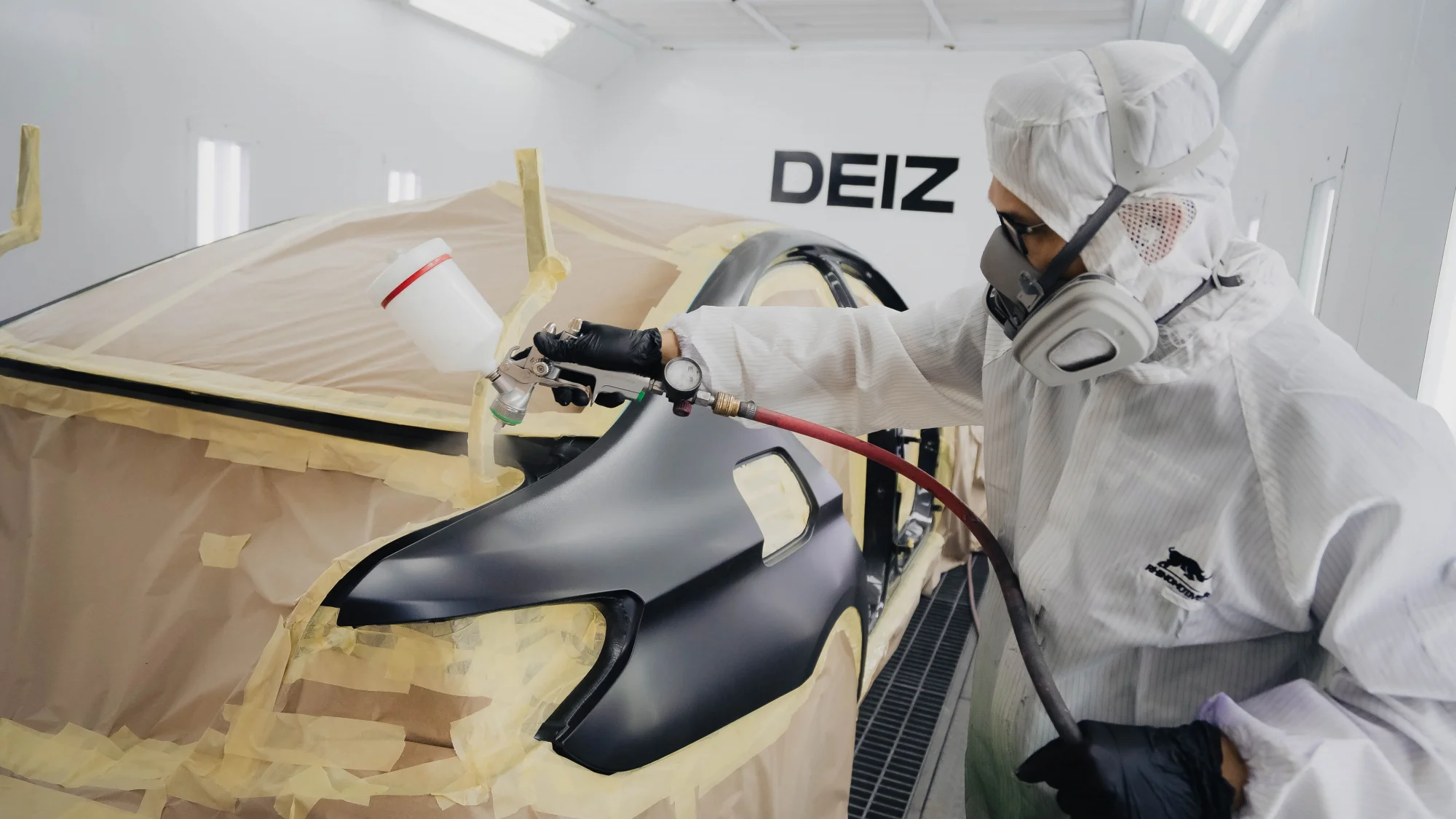
Automotive paint refers to paintwork applied during partial or full repainting. It includes factory-level finishing, custom paint concepts, and peelable paint solutions.
What lasts longer: vinyl wrap or paint?
Automotive paint can stay on the vehicle longer because it becomes the vehicle's finish. Vinyl wrap sits over the existing surface and remains exposed at edges, seams, recesses, and impact zones. It works. Not always. Film quality, paint preparation, fitting quality, storage, climate, mileage, and washing methods decide how each finish ages.
Original paintwork needs its own assessment. Factory paint in good condition is often a sound base for vinyl wrap. Repainted panels should be inspected before installation. Adhesion can change because of surface texture, curing history, prior bodywork, or earlier repairs.
A dull surface is not automatically damaged. Light wash marks, fading, minor contamination, and reduced gloss may be maintained or corrected. Deep scratches, stone chips, lifting film edges, peeling, or damage to paint layers call for a repair decision.
| Durability factor | Vinyl wrap | Automotive paint |
|---|---|---|
| Expected durability | Depends on film type, installation, storage, and care | Depends on paint system, preparation, curing, and maintenance |
| UV radiation resistance | UV radiation affects color stability and film ageing through continuous surface exposure | UV radiation affects gloss and color through oxidation and surface degradation |
| Heat resistance | Heat affects vinyl wrap through expansion, contraction, and stress at edges or complex curves | Heat affects automotive paint through repeated thermal loading and accelerated surface ageing |
| Sand protection | Vinyl wrap can take minor surface abrasion, but abrasive particles can haze or mark the film | Sand can mark automotive paint and reduce gloss, especially when wiped dry |
| Scratch protection | Vinyl wrap may absorb light surface marks, but it is not paint protection film | Automotive paint can be polished or restored in some cases, depending on depth and paint condition |
| Repairability | A damaged section may be replaced locally if the panel and film pattern allow it | Repair may involve paint restoration, partial repainting, blending, or full repainting |
| Effect on original paintwork | Can help preserve original paintwork from routine contamination and light everyday contact | Repainting replaces or covers the previous finish on the repaired area |
| Warranty wording in the available data | Warranty: "up to 10 years", depending on the work | Warranty: "up to 10 years", depending on the work |
A warranty is a service term, not a promise that every vehicle will look identical for a decade. Paint may last longer where preparation, application, curing, and care are handled properly. For a business car with changing logos or campaigns, vinyl wrap can be the longer-lasting operational choice. It avoids treating every visual update as another repainting cycle.
Wrap versus paint: advantages and limitations for a working vehicle
Vinyl wrap suits change. Automotive paint suits permanence. That is the practical divide for a working vehicle. A car carrying company graphics may need a new campaign design long before its base finish wears out. A vehicle kept in one colour for years may justify a different route.
| Option | Advantages for business use | Limitations for business use |
|---|---|---|
| Vinyl wrap | Supports branding wraps and visual changes; removable; local replacement may be possible; can help preserve original paintwork | Sensitive to poor installation, harsh washing, edge damage, and abrasive contamination; not equivalent to paint protection film |
| Automotive paint | Permanent finish; suitable for factory-level finishing and custom paint concepts; paint restoration may improve appearance without full repainting | Repainting can require more preparation, color matching, drying, and business downtime; local repair may be visible if blending is difficult |
Vinyl wrap makes sense when change is part of the job
- Branding wraps suit vehicles whose logo, contact details, or campaign design may change.
- A removable film can be practical when resale condition matters.
- Localized damage may be addressed by replacing a film section rather than repainting a full panel.
- Vinyl wrap does not remove the need for washing, inspection, or careful parking.
Automotive paint makes sense when permanence matters
- Automotive paint suits owners planning to keep one color and finish for a long period.
- Paint restoration can address some surface defects without full repainting.
- Partial repainting may fit damage that reaches the paint layer.
- Automotive paint still needs regular washing and planned surface care.
Business appearance has a daily cost. It shows up in a client car park, outside a meeting room, and in the photo attached to an invoice. A matte branding wrap covered in dried road film says much the same as a dusty shop window. No finish fixes neglect.
How climate affects wrap and paint durability
Climate changes the comparison because surfaces face temperature swings, UV radiation, moisture, road contamination, and abrasive particles every day. Temperature affects vinyl wrap through repeated expansion and contraction. UV radiation affects both vinyl wrap and automotive paint through continuous exposure to light and heat. Moisture, snow, road reagents, dirt, and traffic film can remain around panels and film edges when washing is delayed.
Russia and CIS conditions cannot be reduced to one forecast. One city brings snow, slush, and road reagents. Another means dry dust, direct sun, open parking, and construction debris. The owner should judge the route, storage conditions, road treatment, and wash routine before choosing a finish.
Check these operating conditions before choosing:
- Where the vehicle spends the night: covered parking, street parking, or an open depot.
- How often it is washed during wet, snowy, or dusty periods.
- Whether it drives on roads with sand, gravel, road reagents, or construction dust.
- How long it stands in direct sun during working hours.
- Whether the business can accept repair-related vehicle downtime.
Abrasive particles affect finish appearance through friction. Dry wiping drags dust across vinyl wrap or automotive paint. Rinsing first takes a few more minutes. It can prevent a repair job later.
Dubai heat, UV, and sand: a separate durability scenario
Dubai operating conditions demand separate care because intense UV radiation, heat exposure, and airborne sand stay in the picture for much of the year. Vinyl wrap can age sooner at stressed edges and complex curves when direct sun, heat, and contamination are left alone. Automotive paint can lose visual freshness when sand is rubbed into the surface or contamination remains for extended periods.
Dubai is not a Russia or CIS climate scenario. Fine sand settles in panel gaps, around badges, at film edges, and on horizontal panels. Ambient temperature is only part of the problem. A parked vehicle surface can face far harsher heat than the number shown in a weather app.
What reduces climate-related wear?
- Park under cover where practical.
- Rinse sand and dust before wiping the surface.
- Remove contamination from film edges, door shuts, and panel gaps.
- Inspect vinyl wrap edges after prolonged heat exposure.
- Discuss compatible wash products with the installer or paint provider.
I've seen owners compare finishes for hours, then leave the vehicle in open sun every afternoon. The parking decision at 2 pm is part of maintenance in Dubai. Strange, perhaps, but a shaded space can matter more than a polished sales pitch.
What this changes for a commercial vehicle
Care discipline should carry as much weight as initial appearance in Dubai operating conditions. A branded vehicle can keep a more consistent finish when it is rinsed correctly and parked with some shade. A supposedly permanent finish won't stay fresh if it is dry-wiped after dusty days and ignored until a client visit.
Heat is only one part of it.
Care for vinyl wrap in Russia, CIS, and Dubai conditions
Vinyl wrap ages more evenly when owners avoid dry abrasion, clean contamination promptly, and inspect vulnerable edges. The installer should confirm water temperature, washing pressure, approved cleaning products, and edge-care requirements for the specific film. Film manufacturers can set different limits. Generic wash advice should not override instructions for that vinyl wrap.
In Russia and CIS, slush, road reagents, moisture, and seasonal dirt should not build up near seams and edges. In Dubai, sand and dust should be rinsed away before a cloth or wash mitt touches the panel. The order matters.
Vinyl wrap care checklist
- Wash the vehicle regularly after road contamination, dust, sand, or seasonal dirt.
- Rinse first. Do not rub a dry, dusty panel.
- Ask the installer which wash products are compatible with the film.
- Check film edges, recesses, mirrors, handles, and complex curves during routine cleaning.
- Use covered parking when possible.
- Report lifting edges, tears, or local abrasion early, before the affected area grows.
A clean vinyl wrap doesn't need theatre. No heroic polishing montage. It needs correct washing, ordinary inspections, and timely action when an edge begins to lift.
Paint maintenance: washing, polishing, wax, and sealants
Automotive paint needs washing, inspection, and care that matches its condition and paint history. Standard wash and ceramic wash are separate service categories in the available data. Before choosing paint restoration, polishing, wax, or a protective sealant, inspect for light wash marks, deeper scratches, fading, prior repainting, contamination, and coating residue.
Paint restoration is work intended to improve the condition and appearance of an existing paint surface. It is not identical to full repainting.
Light Polishing may be discussed for minor surface defects. Detailing Polishing may fit cases needing more involved correction. The paint provider should examine thickness, previous repairs, clear-coat condition, and the expected finish before choosing a process.
What each paint-care option does
- Standard wash removes routine dirt and traffic film.
- Ceramic wash is a separate wash option for vehicles maintained with compatible ceramic-care routines.
- Light Polishing addresses limited surface correction needs.
- Detailing Polishing is used where appearance correction requires more work.
- Wax is a maintenance option that can support water behavior and visual finish, but it does not repair damaged paint.
- Protective sealant is a paint-care product applied to support surface maintenance. It does not mean permanent protection and does not replace inspection or washing.
The available service data lists Ceramic Coating with a 1 year warranty, update after 6 month. It also lists Ceramic Coating with a 3 years warranty, update evey 6 month. GYEON appears in the detailing data, while RUPES tools are listed for paint correction. These are available options. They do not replace a proper inspection of the paint surface.
Wax and a protective sealant sit in a maintenance plan. Polishing works differently because it changes surface condition through correction. That distinction prevents a common mistake: asking a maintenance product to solve damage that needs restoration work.
Repair and restoration: what happens after damage
Vinyl wrap is often easier to repair after localized cosmetic damage because the affected film section may be replaced. Automotive paint follows a wider repair path. Damage depth, panel location, color, finish, previous paintwork, and blending requirements all affect the choice. A shallow mark may allow paint restoration. Damage reaching paint layers can require partial repainting or a larger repair.
| Repair question | Vinyl wrap | Automotive paint |
|---|---|---|
| Light surface marks | Inspect the film condition before deciding on replacement | Paint restoration may be considered if the defect is within the correctable surface layer |
| Tear or lifting edge | Local film replacement may be possible | Not applicable in the same way; inspect the underlying paintwork |
| Deep scratch | Film may need replacement, and underlying paint must be checked | Partial repainting or a larger repair may be required |
| Sand abrasion | Replace visibly damaged film area where practical | Assess whether paint restoration can correct the surface before repainting |
| Color consistency | Depends on film batch, pattern, age, and panel coverage | Depends on color matching, blending, finish consistency, and previous paint history |
| Vehicle downtime | Can be limited when only one film section is replaced | Can increase with preparation, painting, curing, and blending work |
Request an inspection when damage crosses panel edges, reaches a bumper corner, exposes original paintwork, includes corrosion, or sits on a previously repainted panel. Don't choose a repair method from a phone screen. A spreadsheet can compare quotes. It cannot judge a damaged clear coat from three photos sent at 10:40 pm.
Cost and downtime: wrap versus repainting
Vehicle downtime can matter as much as the initial cost when a commercial vehicle is used every day. Vinyl wrapping can often require less time than repainting, while paintwork may involve additional preparation, colour matching, application and curing. Actual costs and turnaround times depend on the vehicle size, body condition, finish, design complexity and the amount of preparation required.
Which option to choose for a small-business vehicle
Choose vinyl wrap where brand flexibility, original paintwork preservation, and shorter planned vehicle downtime come first. Choose automotive paint where the car needs a long-term color change, damaged paint layers repaired, or a factory-level finishing approach. If appearance, durability, and downtime point in different directions, downtime should settle the choice for a vehicle used to earn money.
| Business situation | Better starting option | Why |
|---|---|---|
| Frequent visual updates or campaign graphics | Vinyl wrap | Branding wraps can be changed without treating every update as repainting |
| Vehicle planned for resale with good original paintwork | Vinyl wrap | A removable finish can help preserve the original paintwork from everyday wear |
| Deep paint damage or inconsistent previous repairs | Automotive paint inspection | The paint condition may require repair beyond surface maintenance |
| Owner has limited maintenance time | Depends on parking and washing capacity | Both finishes fail faster when contamination and abrasive dust are left unmanaged |
| Vehicle cannot be off the road for long | Vinyl wrap | Available data lists 5 FULL WORKING DAYS for the defined wrapping deadline, versus listed paint periods of 14 or 18 days by class |
| Dubai operating conditions | Depends on care discipline | Heat, UV radiation, and sand make washing and parking part of the ownership decision |
FAQ: choosing between wrap and paint
How long does vinyl wrap last compared with automotive paint?
Automotive paint can have a longer potential service life. Vinyl wrap is removable and depends more on film condition, installation, washing, parking, and climate. The available warranty wording for wrapping and paintwork is "up to 10 years", depending on the work.
Which option is easier to repair after scratches or sand damage?
Vinyl wrap is often easier to repair locally because a damaged section may be replaced. Automotive paint may need paint restoration, partial repainting, color matching, or blending, depending on damage depth.
Can vinyl wrap protect the original paintwork from everyday wear?
Vinyl wrap can help preserve original paintwork from routine contamination and light everyday contact. It is not paint protection film and should not be treated as identical protection against impact damage.
How does Dubai heat affect vinyl wrap and automotive paint?
Dubai heat, UV radiation, and sand increase surface stress for both finishes. Vinyl wrap needs edge inspection and compatible washing. Automotive paint needs prompt removal of abrasive dust and contamination.
What maintenance does car paint need after repainting?
Automotive paint needs regular washing, inspection, and care based on paint condition. Light Polishing, Detailing Polishing, wax, protective sealant, or ceramic-care options should follow an assessment of the paint surface.
Does paint sealant replace polishing or waxing?
No. A protective sealant is a maintenance option. Polishing is corrective work for surface condition, while wax has another role in paint care.
Which option causes less vehicle downtime for a business owner?
Vinyl wrap can cause less planned vehicle downtime in the available data. The listed deadline is 5 FULL WORKING DAYS. Listed painting periods are 14 or 18 days by vehicle class.
What should a vehicle owner ask a wrap or paint provider before ordering work?
Ask about surface preparation, vehicle class, finish type, included panels, deadline, warranty wording, wash requirements, repair method, and how existing paint damage changes the quote.
