
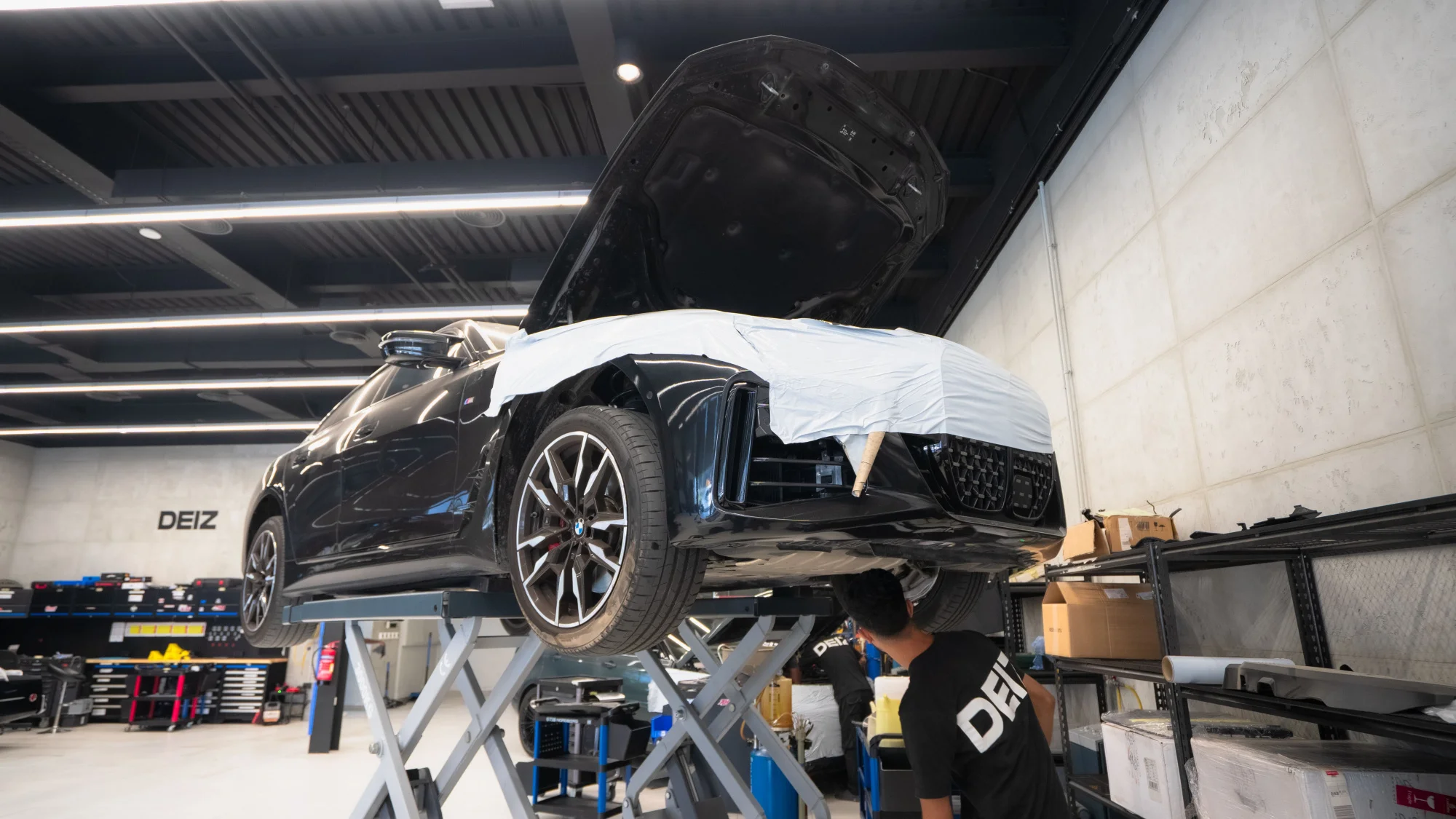
A clear maintenance request saves time at the workshop. It also reduces the chance of approving work you did not expect. Before booking, decide whether the car needs scheduled maintenance, corrective repair, or an inspection for a reported issue. Prepare the vehicle history, mileage, recent changes in behaviour, dashboard messages, photographs, and Dubai access details. Don't try to identify the mechanical cause yourself. Your role is to give the workshop an accurate starting point.
Maintenance is planned servicing intended to keep a vehicle in the required operating condition. It follows the applicable service schedule. It may include inspections, fluids, filters, and other scheduled work.
Repair is corrective work performed to address a fault, damage, warning, leak, or malfunction. A repair request begins with a reported issue, not with an assumed failed part.
Define the maintenance request before contacting a workshop
Separate scheduled maintenance from a reported issue before you book. A premium vehicle may need both in one visit. Put them on separate lines in the request. The workshop can then quote planned work separately from corrective repair.
For a Dubai workshop, prepare the brand, model, model year, current mileage, and identification details if requested. Include the date of the last service and how the vehicle has been used since then. Mention long storage periods, frequent short journeys, extended idling, road trips, or performance driving when they affect the request. Don't fill gaps in the vehicle history with guesses.
DEIZ GARAGE offers scheduled maintenance and advanced diagnostics according to manufacturer standards. The workshop states that it is certified for BMW, Mercedes, Porsche, and Lamborghini. It also states that it uses genuine parts and manufacturer-approved lubricants.
| Request type | What the owner should report | What should not be assumed |
|---|---|---|
| Scheduled maintenance | Current mileage, date and mileage of previous maintenance, available vehicle history, requested appointment timing | That every item from an earlier invoice is due again |
| Corrective repair | Warning message, visible leak, noise, smell, vibration, change in vehicle behaviour, and when it occurs | The failed component or technical cause |
| Combined visit | Planned maintenance items and each reported issue in separate lines | That a reported issue is included in the maintenance price |
| Inspection visit | The reason for inspection and the evidence available | That inspection findings automatically authorise repair |
A service request works like a medical intake form. The owner describes what happened. The technician determines why it happened. Calling a noise "transmission failure" can send attention in the wrong direction before inspection starts.
Write observations, not diagnoses
Use plain language. For example: "A warning message appeared after the car was parked overnight." Or: "A fluid mark was visible beneath the front after driving." Include when it began, whether it is constant or intermittent, and the conditions present.
Scheduled maintenance and a repair visit work differently. Scheduled maintenance follows an agreed scope. Corrective repair depends on inspection findings. The workshop should identify which items belong to planned service. It should separately identify work related to the reported issue.
Prepare vehicle records before booking
Bring together the information that lets a workshop understand the car before it arrives. A complete vehicle history can prevent duplicated work. It also gives the technician context for the current request. If a record is unavailable, say so. An honest gap is more useful than a confident invention.
Prepare these materials before you call, message, or submit a booking form:
- Current mileage and a photograph of the instrument display where appropriate.
- Vehicle history, including previous maintenance and repair invoices.
- Previous inspection reports and diagnostic reports, if available.
- Active dashboard warnings or messages, photographed before they disappear.
- Photographs or short videos of visible leaks, damage, tyre condition, or unusual display behaviour.
- Information about aftermarket modifications, non-standard wheels, software changes, or accessories that may affect access or inspection.
- Details of recent battery replacement, storage, transport, or bodywork, if relevant to the reported issue.
| Record | Why the workshop may need it | What to do if it is missing |
|---|---|---|
| Vehicle history | It shows previous maintenance and repair work | State that the record is unavailable |
| Previous invoice | It may identify fluids, filters, or work already completed | Do not estimate the items from memory |
| Warning-light photograph | It preserves wording that may disappear later | Send the original image without editing |
| Video of a symptom | It can show sound, timing, or display behaviour | Record only when safe to do so |
| Vehicle identification details | The workshop may request them to identify the vehicle accurately | Share them through the workshop's agreed channel |
Don't curate the evidence too heavily. A short, unedited video can be more useful than a long explanation built around a theory. The technician can ask for more material. That's their job.
Inspect the vehicle and document current symptoms
Inspect visible condition before booking. Then report what you find without naming the cause. This gives the workshop a usable reported issue. It also protects the handover record. Look at the car in good light, preferably before washing it. Cleaning can remove evidence of a fresh leak or mark.
A reported issue is an owner's description of an observable change in the vehicle. It is not a diagnosis. It does not confirm the source of a fault.
Check the following areas:
| Area | What to record | How to describe it |
|---|---|---|
| Ground beneath the vehicle | Fresh spots, drips, or pooled fluid | Location under the vehicle, colour if visible, and when first noticed |
| Exterior | New scratches, dents, wheel marks, loose trim, or damaged glass | Photograph each area from close and wider angles |
| Interior | Warning messages, unusual odours, water marks, or electrical behaviour | Note when the condition appears |
| Tyres and wheels | Visible damage, uneven wear, or a low-pressure warning | Report the observation, not the cause |
| Driving behaviour | Vibration, pulling, unusual noise, delayed response, or overheating warning | State speed, road condition, and frequency |
| Parking condition | Smell, smoke, steam, or repeated warning after parking | Record the timing and contact the workshop |
"Inspection & diagnostics" is the first stage in DEIZ GARAGE's published process. That sequence matters. The car should be inspected before corrective repair is treated as confirmed work.
Record the conditions around each symptom
Context often changes the value of a symptom report. A noise may happen only while turning. It may begin after the car has stood for several days. It can appear only after the vehicle reaches a particular operating condition. Performance changes may show up during acceleration, braking, or low-speed manoeuvres. Note those conditions, then stop there.
A useful record contains four points:
- What you observed.
- When it first appeared.
- How often it occurs.
- What the car was doing at the time.
Could the problem be nothing? Possibly. But a visible leak, smoke, steam, a severe warning, or a change that makes the car feel unsafe isn't the moment for guesswork. Contact the workshop for guidance before driving to the appointment.
No shortcuts here.
A photograph of a warning display can preserve wording that disappears after the vehicle is switched off. A video may capture a noise that doesn't occur at the workshop. A note about the road surface can distinguish a repeated vibration from a one-off event. These details don't prove a cause. They give the technician something real to inspect. That is a better starting point than a confident theory about a component that may be perfectly sound.
Choose the maintenance scope and prepare the booking request
A booking request should state the car details, planned maintenance need, reported issues, preferred appointment format, and approval rules. Ask the workshop to separate scheduled maintenance, inspection, and corrective repair in writing. This keeps the first scope clear if new findings appear later.
DEIZ GARAGE describes the next stage as "Clear scope, estimate, and timeline." A written scope makes comparison easier. The owner can see what is included, what requires inspection, and what remains subject to approval.
Use this booking sequence
- Identify the car and current mileage.
- State whether the visit is for scheduled maintenance, a reported issue, or both.
- Attach available vehicle-history documents and evidence.
- List each reported issue as a separate observation.
- Ask whether the first appointment is an inspection, maintenance visit, or repair visit.
- Request written approval before work outside the agreed scope begins.
Ask for separate lines where the workshop proposes additional work. Maintenance may be planned from the vehicle history. Repair recommendations arise from an inspection. Mixing both into one vague sentence is how an owner loses track of the decision.
DEIZ GARAGE lists "Production / installation / finishing" as a later process stage. The practical point is simple. No later stage should be treated as approved merely because the car is already at the workshop.
Where owners lose control of the scope
The usual mistake is approving a broad instruction such as "do whatever is needed." It sounds efficient. It isn't always. That instruction removes the boundary between the original request and work found later.
Set an approval path before handover. Ask the workshop for inspection findings and the proposed corrective repair. Request parts information where relevant. Ask for the revised estimate before it proceeds. Cost depends on the approved scope because the scope determines labour, parts, and time. Keep that chain visible, even when the first conversation seems straightforward and the reported issue looks minor.
Short version: approve the next decision, not an undefined future list.
Prepare vehicle access and handover in Dubai
Confirm access, parking, collection, and handover arrangements before the appointment. In Dubai, a premium car may be collected from a residence, hotel, office, private parking facility, or storage location. Each site can have its own security or valet process. A confirmed booking time alone may not be enough.
DEIZ GARAGE lists its location as Dubai, UAE, with Dubai as its primary service area. GCC services are available on request. Its published opening hours are 10:00–19:00. Confirm the specific appointment time, collection arrangement, and access instructions directly with the service provider.
Before collection or drop-off, remove personal documents, keys not required for handover, valuables, parking access cards, and personal items from storage areas. Keep only the items the workshop has asked you to provide.
| Handover point | What the owner should confirm | Why it affects the visit |
|---|---|---|
| Collection location | Building name, parking level, access route, contact person, and security process | Access restrictions can delay collection |
| Parking conditions | Height limits, valet rules, visitor registration, and towing restrictions | The collection method depends on site rules |
| Vehicle condition | Mileage, fuel level, warning messages, exterior condition, wheels, and interior condition | Photographs create a shared record before handover |
| Transport and storage | Who collects the vehicle, where it will be kept, and who is responsible during the process | The owner needs a clear custody record |
| Insurance questions | What cover applies during collection, transport, storage, and work | The service provider should explain its arrangements |
Take time-stamped photographs before handover. Include all sides, wheels, the interior, instrument display, and existing damage. It may feel fussy. It is simply good recordkeeping.
DEIZ GARAGE names "Quality control + delivery briefing" as the fourth stage of its process. At return, ask for the completed-work record, inspection findings, and an explanation of work that differs from the original scope.
Questions to ask before approving maintenance
Ask questions that turn the scope into clear decisions. A service provider should explain what it will inspect, what is included, and when it will request approval for extra work. The point isn't to interrogate the technician. It's to avoid relying on assumptions.
Use this list before authorisation:
- What is included in the proposed maintenance scope?
- Which part of the visit concerns the reported issue rather than scheduled maintenance?
- How will the technician inspect and confirm the reported issue?
- What evidence will be shared before corrective repair is recommended?
- Will additional parts, work, or costs require approval before work begins?
- What vehicle-history record, inspection result, and completed-work information will I receive?
- How will the workshop contact me if it finds a leak, warning, or urgent issue?
- What is the expected timeline for the inspection stage and for approved work?
DEIZ GARAGE states that its prices are ladders by vehicle class, not single numbers. Request a written scope before comparing figures. A single price without a defined vehicle class, work list, and approval boundary doesn't tell the owner much.
The workshop's published Minor Service description includes engine oil change with RED LINE 5W-40, oil filter, drain plug and washer, and replacement of two dust and air filters. It also includes initial diagnostics and fluid and suspension checks. Its Major Service description lists oil and filter work, filter replacement, full diagnostics, air-conditioning and engine-attachment checks, and fluid checks. It also lists transmission oil and filter change, spark plug replacement, brake-fluid change, and wheel alignment. Ask which published items apply before authorising them.
Keep the return record with the vehicle history
The final paperwork belongs in the vehicle history, not in a forgotten email thread. Keep the invoice, agreed scope, inspection findings, work completed, and recommendations that were declined or postponed. This record supports the next booking because the technician can see what has already been done.
A premium vehicle's resale file is built one document at a time. Boring, perhaps. Useful, absolutely.
FAQ
How to prepare for premium and supercar maintenance in Dubai
How should I prepare for maintenance before contacting a workshop?
Prepare the vehicle details, current mileage, vehicle history, last-service information, active warnings, and a short list of reported issues. State clearly whether you need scheduled maintenance, corrective repair, or an inspection. Send photographs and videos of visible symptoms without trying to diagnose the cause.
What should supercar owners in Dubai check before ordering maintenance?
Check for visible leaks, warning messages, unusual smells, noises, tyre or wheel damage, and changes in driving behaviour. Photograph the vehicle condition before handover. Confirm collection access, parking rules, transport arrangements, and the workshop's approval process for additional work.
What should premium-car owners in Dubai check before ordering maintenance?
Premium-car owners should prepare the vehicle history, current mileage, previous invoices, warning-light photographs, and evidence of reported issues. They should ask the workshop to separate planned maintenance from corrective repair and to provide a written scope before additional work is approved.
What should Porsche and Ferrari owners prepare before booking maintenance?
Porsche and Ferrari owners should provide the exact model details requested by the workshop, current mileage, vehicle history, previous maintenance records, warning messages, modification information, and any evidence of a reported issue. Porsche and Ferrari do not have identical maintenance requirements, so the scope should be confirmed for the individual vehicle.
When should I ask the workshop for guidance instead of driving to the appointment?
Ask for workshop guidance before driving if you see a significant leak, smoke, steam, a severe warning, or a change that makes the vehicle feel unsafe. Describe what you observed, share photographs or video where safe, and follow the service provider's collection or transport instructions.
