How DEIZ GARAGE serviced a Ferrari F40 with 25,544 km, restored original components and prepared it for occasional driving and Ferrari Classiche assessment.
A Ferrari F40 arrived at DEIZ GARAGE in Dubai with 25,544 km and no available service history. The owner wanted its mechanical condition assessed, outstanding concerns addressed and factory specification restored before Ferrari Classiche inspection. Although the car would remain in a collection, it was intended to be driven once or twice a month.
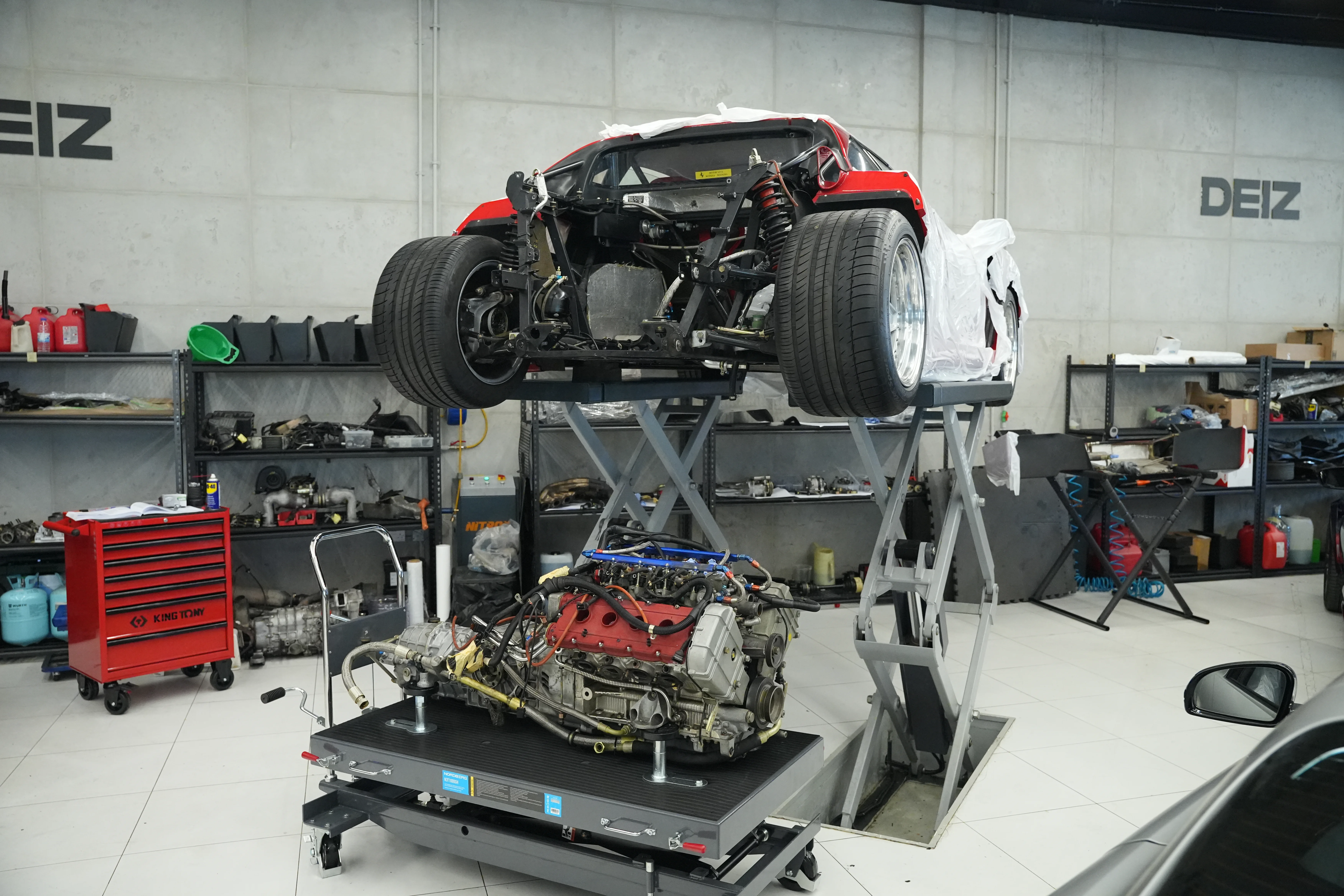
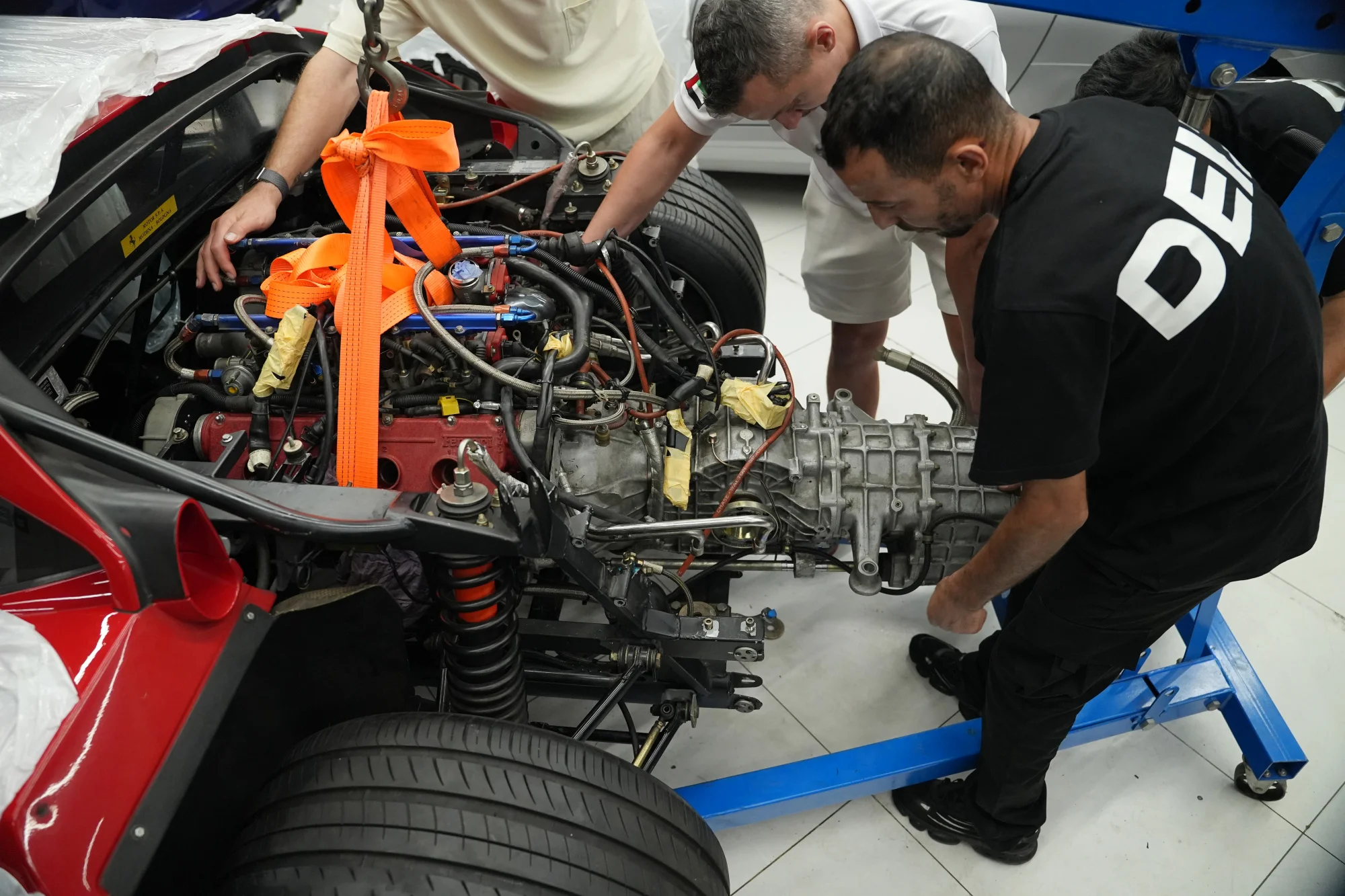
The resulting major service covered the fuel system, timing drive, engine sealing, cooling, clutch, steering, suspension and exhaust. The engine was removed for access, not for an internal rebuild. Following reassembly, the car completed controlled start-up, road testing and final checks.
Initial Inspection and Engine-Out Service
Without maintenance records, mileage alone could not establish when critical components had last been renewed. We inspected the car before dismantling and continued checking individual parts as access improved.
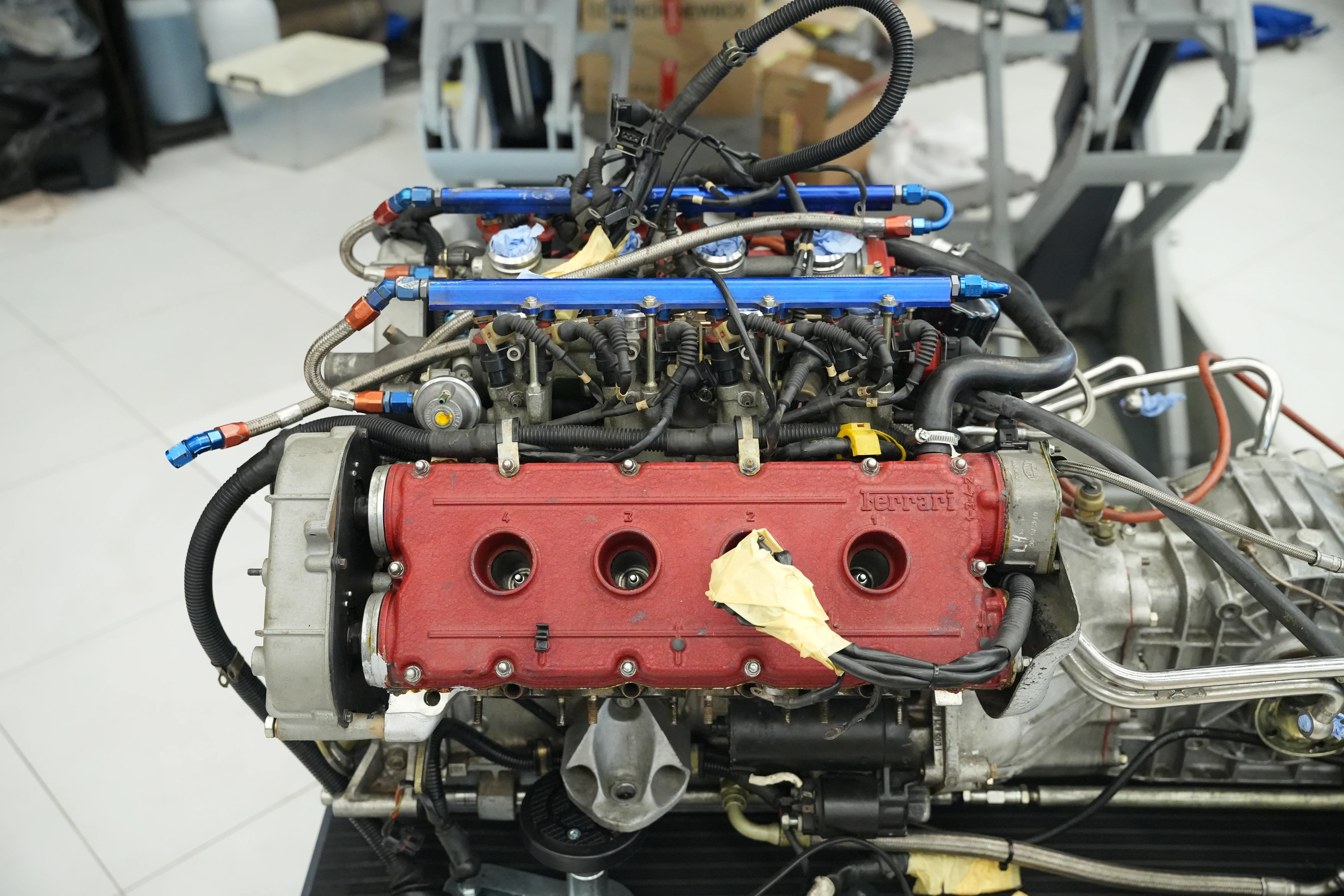
Before removal, the bodywork was protected with film. Components and fasteners were labelled, photographed and stored separately. Dry-ice cleaning was used selectively on the engine, gearbox, engine bay, underbody and chassis components.
Both timing belts and tensioner bearings were replaced, and cam timing was checked using the applicable Ferrari F40 Workshop Manual procedures. [1]
The engine service also included accessory belts, spark plugs, both camshaft sensors, vacuum hoses, specified gaskets and crankshaft seals. Four new powertrain mounts were installed.
Heat shields were restored or renewed as required, with new thermal protection fitted around the fuel tanks and rear bumper.
Ferrari F40 Fuel Tank and Fuel-System Replacement
The removed fuel tanks were manufactured in July 2016 and had a documented expiry date of July 2026. No cracks, visible damage or leaks were identified, but their stated service life had ended.
We fitted genuine Ferrari tanks manufactured in March 2026, each supplied with a certificate specifying an expiry of March 2036.
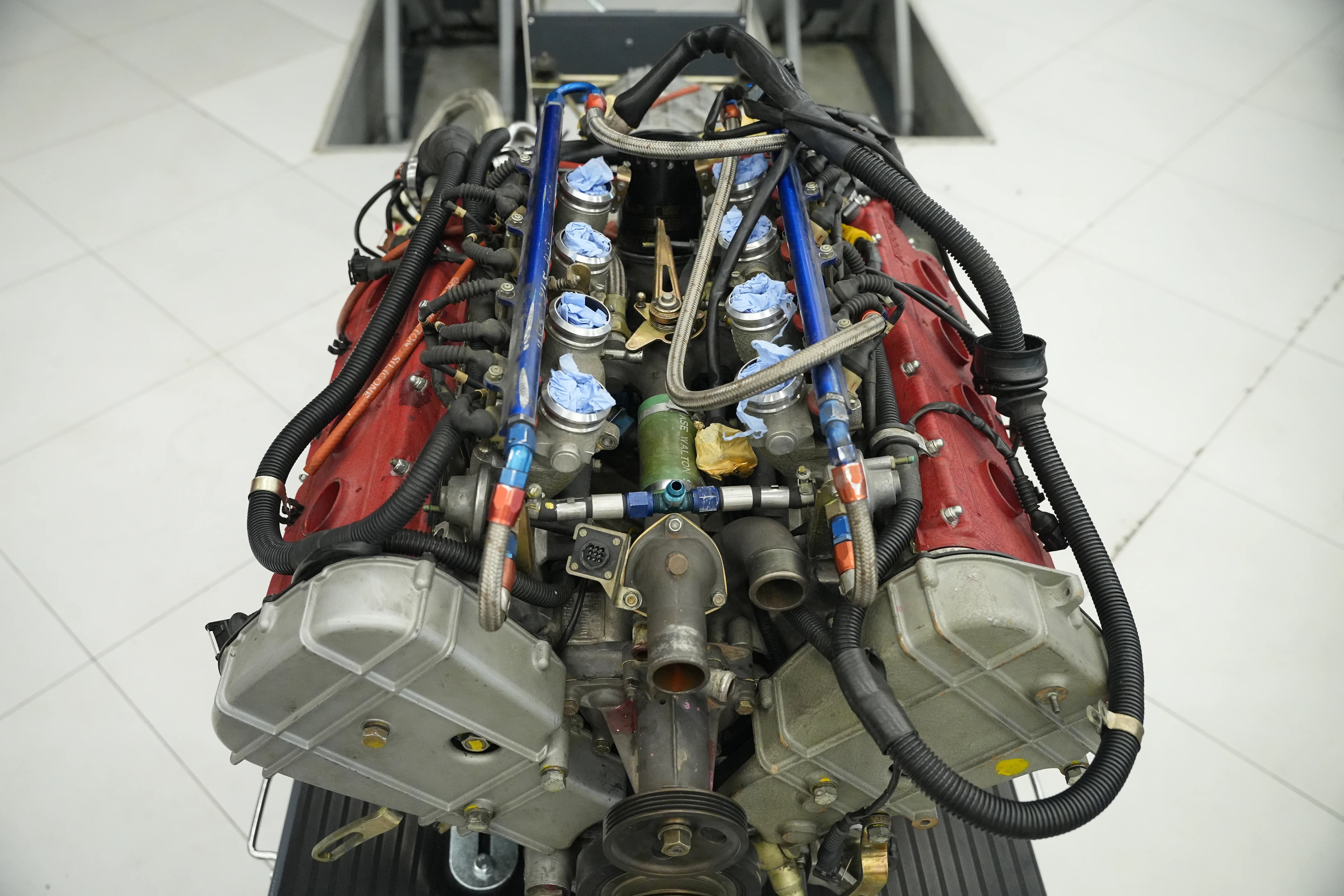
Fuel lines with no confirmed replacement history were renewed together with the filters and pressure regulators. The original injectors were cleaned, flow-tested and found within specification, so they were refitted.
After assembly, the team checked fuel delivery, operating pressure, residual pressure and leak-tightness on both banks.
The replacement dates and test requirements are explained further in the companion article, Ferrari F40 Fuel Tank Replacement: Service Life, Injector Testing and Fuel System Verification.
Cooling, Exhaust and Chassis Restoration
The cooling system received a new radiator, water pump, thermostat, expansion tank and hoses. After filling and bleeding, coolant circulation, thermostat operation and cooling-fan function were checked during controlled warm-up and subsequent inspection.
A previous owner had replaced the original catalytic converters with straight pipes. We reinstated the original converters as part of the return to factory specification.
The turbochargers were resealed. The wastegate was inspected, and its diaphragm was retained because it was in excellent condition.
The clutch assembly, release bearing, master cylinder, reservoir and associated seals were renewed. Driveshaft boots and clamps were also replaced.
The original steering rack was restored, suspension bushes and brake-caliper fasteners were renewed, and new Pirelli P Zero tyres were fitted. Central wheel nuts and retaining clips were replaced, followed by balancing and alignment.
First Start and Final Verification
Before starting, we checked mechanical connections, fluids and fuel-system integrity. Preliminary oil circulation was completed in accordance with the requirements of the F40’s dry-sump lubrication system. [1]
During controlled warm-up, the team monitored oil pressure, temperatures, cooling-system behaviour and both engine-management systems.
The car then underwent road testing covering braking, clutch operation, gear selection, steering and suspension. Further diagnostic, fluid-level and connection checks followed.
These were the recorded verification stages; the project summary does not provide numerical results for every individual test.
Ferrari Classiche and Project Documentation
An F40 specialist from Maranello assisted with research into the car’s history and advised the team during the project.
The completed vehicle was inspected by a Ferrari-certified specialist and received Ferrari Classiche certification. [2] The certification concerns authenticity, while the DEIZ GARAGE record documents the mechanical work.
The project produced a photographic album exceeding 300 pages, covering initial condition, dismantling, component findings, repairs and reassembly. Printed and PDF copies were prepared for the owner, while removed parts were labelled and packaged.
FAQ
Does a Ferrari F40 major service always require engine removal?
No. In this project, removal provided access for timing-drive, sealing and related work. The engine was not internally rebuilt.
Why were the F40 fuel tanks replaced?
Their documented service life ended in July 2026, although no leaks or visible damage were found. New genuine Ferrari tanks have a stated expiry of March 2036.
Were the original components preserved?
Where inspection supported retention. The original injectors passed flow testing, the wastegate diaphragm was retained and the steering rack was restored. Other components were renewed as required.
What was checked before the car returned to the road?
Fuel-system integrity, preliminary oil circulation, controlled warm-up and engine-management operation were checked. Road testing and a subsequent inspection covered the clutch, braking, steering, suspension and fluid systems.
Technical References
[1] Ferrari F40 Workshop Manual, Chapters B and C. Factory procedures for timing, lubrication and fuel-system work.
[2] Ferrari Classiche brochure. Manufacturer information about authenticity assessment and certification.
The dates, findings and completed operations relate to this specific Ferrari F40. Factory references provide technical guidance rather than independent confirmation of workshop results.
For an F40 returning to occasional road use, a major service should establish which components need renewal, which original parts can be preserved and how the completed work will be verified.