How DEIZ GARAGE renewed the cooling system of a Ferrari F40 and verified coolant circulation, temperature control and system integrity.
During a major service at DEIZ GARAGE in Dubai, a Ferrari F40 underwent cooling-system renewal as part of its return to factory specification.
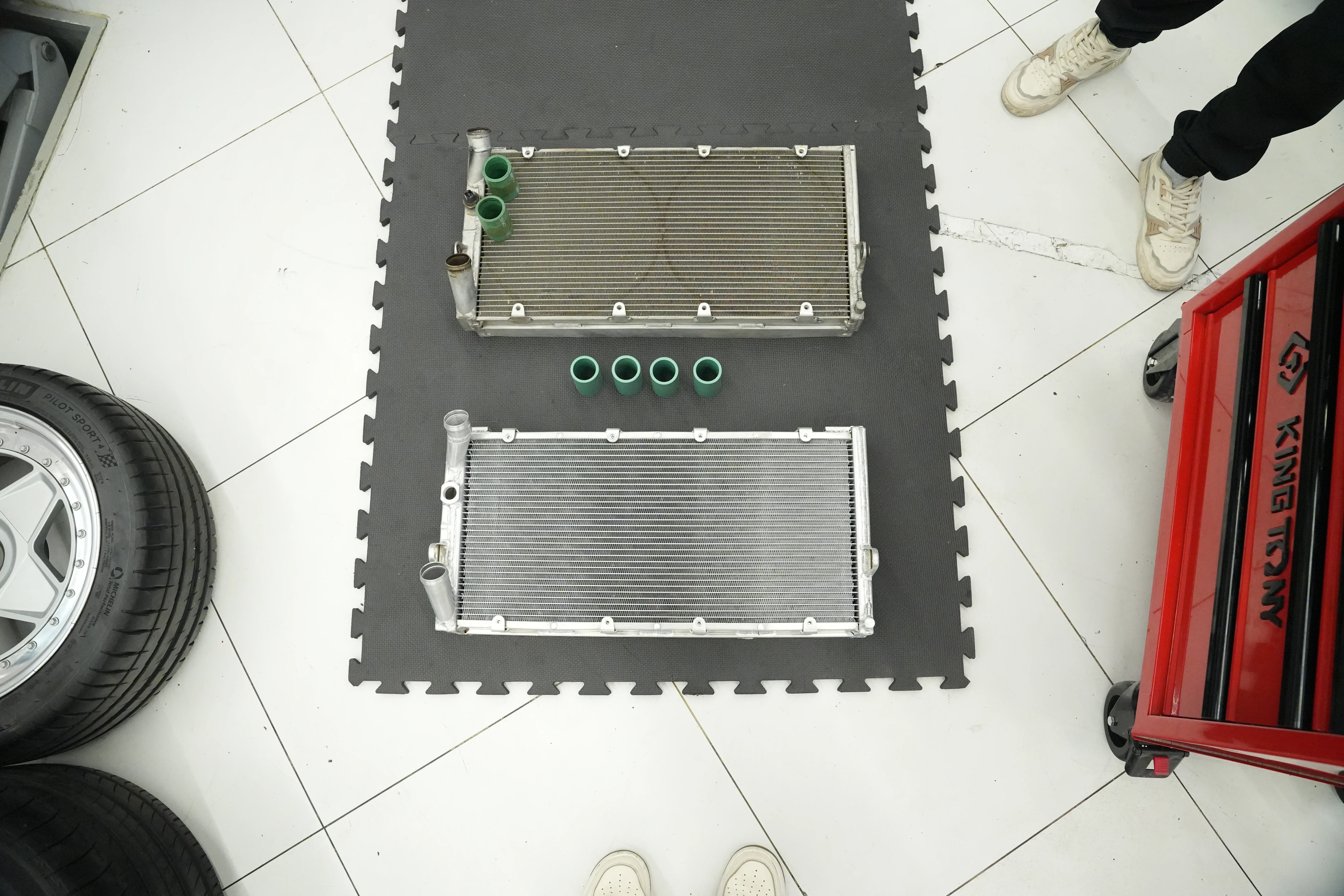
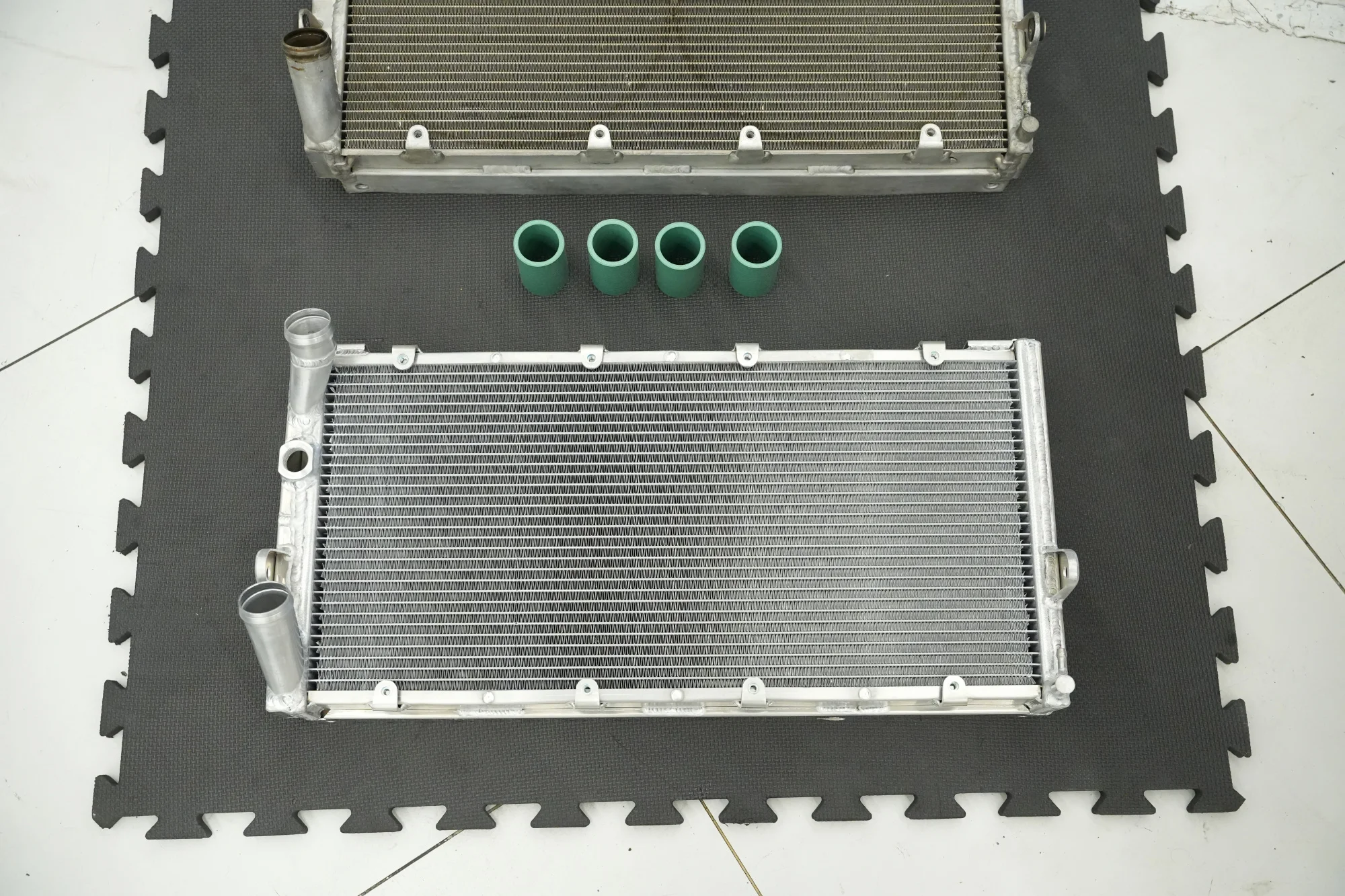
The work included a new radiator, water pump, thermostat, expansion tank and coolant hoses, using genuine Ferrari replacement parts.
The owner intended to keep the car in a collection while driving it regularly. The cooling-system service therefore focused on both mechanical preservation and reliable operation.
Rather than replacing individual components without considering their interaction, we assessed the complete coolant circuit, including circulation, temperature control, connections and leak-tightness.
Ferrari F40 Cooling System: Factory Design
The Ferrari F40 uses a front-mounted radiator connected to its rear-mounted engine through an extended coolant circuit.
Its factory cooling system includes a crankshaft-driven centrifugal water pump, thermostat, expansion tank, electric cooling fans, thermal switch, connecting pipes and an air bleed screw. [1]
The water pump circulates coolant through the system, while the thermostat controls its routing during warm-up. The expansion tank accommodates changes in coolant volume and pressure.
Because these components operate together, cooling-system maintenance must consider the condition of the complete circuit.
Radiator, Water Pump and Thermostat Replacement
The service included replacement of the following genuine Ferrari components:
- Radiator.
- Water pump.
- Thermostat and associated seals.
- Expansion tank and pressure cap.
- Coolant hoses included in the agreed service scope.
The original radiator had never been replaced. Although inspection did not identify a defect, its age supported preventive replacement during the wider restoration programme.
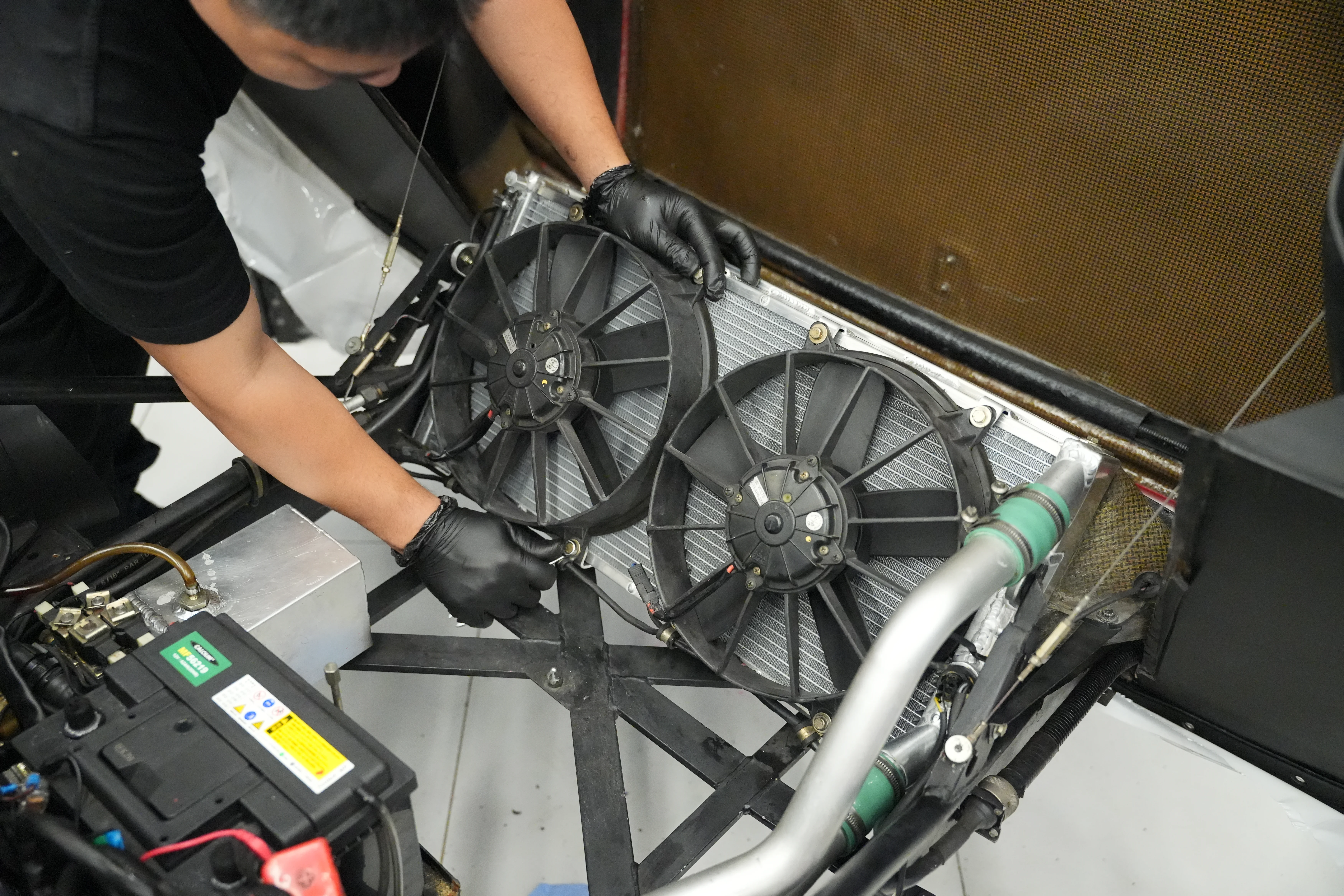
The cooling-system work was coordinated with engine removal and other mechanical operations.
During reassembly, hose connections and joints were inspected. The completed circuit was subsequently checked for coolant circulation, temperature-control operation and leakage during warm-up and cooling.
Why the thermostat matters
The F40 thermostat is installed on the water-pump body and begins opening at approximately 80–85°C, according to the Ferrari Workshop Manual. [2]
Ferrari specifically warns that removing the thermostat would cause coolant to circulate mainly through the bypass, effectively excluding the radiator from the primary flow path.
For this reason, maintaining the correct thermostat arrangement is essential when returning the cooling system to factory specification.
A new thermostat was installed, and coolant circulation through the radiator was checked during controlled warm-up.
Ferrari F40 Factory Cooling System Specifications
The Ferrari F40 Workshop Manual provides the following technical references. [1][2][3]
|
Parameter |
Factory specification |
|
Total cooling-system capacity |
17 litres |
|
Thermostat opening temperature |
80–85°C |
|
Cooling fan thermal switch |
On at 84°C; off at 75°C |
|
Expansion tank cap valve |
1.1 bar |
|
Cold coolant level |
Approximately 6–8 cm below the filler-opening plane at most |
These are manufacturer specifications, not measurements taken from this particular vehicle.
The 17-litre figure refers to the complete cooling circuit. The actual refill quantity during service depends on how much coolant has been drained.
The 1.1-bar value describes the expansion-tank cap’s pressure-control valve; it is not a general instruction for pressure testing.
The cooling fans are controlled by a thermal switch at the radiator, separate from the engine thermostat. Their factory temperature references must therefore be interpreted in the context of the switch location.
Coolant Filling, Bleeding and System Verification
For this project, DEIZ GARAGE used ROWE R AN-SF 12+ READY-MIX -5°C, as recorded in the service documentation.
Following assembly, the cooling system was filled and bled according to the Ferrari Workshop Manual and the project’s post-assembly checklist.
The factory procedure begins with a cold engine and uses the expansion tank as the filling point. An air bleed screw allows trapped air to be released from the circuit. [1][2]
Checks during controlled warm-up
Once filled and bled, the system was brought up to operating temperature so the thermostat could open and coolant could circulate through the radiator.
The team checked:
- Coolant circulation through the new radiator.
- Thermostat and temperature-control operation.
- Cooling-fan operation.
- Hose connections and joints.
- Visible signs of coolant leakage.
After the engine cooled, the coolant level and connections were inspected again.
The checks were repeated after road testing to assess the system following operation under driving conditions.
Ferrari specifies that routine coolant-level checks must be performed with the engine cold and warns against removing the expansion-tank cap while the engine is hot. [2]
The project record confirms these verification stages but does not provide individual measured temperatures or pressure-test readings.
Cooling System Service Documentation
The cooling-system work was photographed before, during and after replacement.
The images formed part of the wider Ferrari F40 major-service album exceeding 300 pages, documenting component condition, dismantling, repairs and reassembly.
Removed components were labelled and packaged for the owner.
The photographs, component information and service records provide a documented reference for future cooling-system inspection and maintenance.
FAQ
What components were replaced during this Ferrari F40 cooling-system service?
The radiator, water pump, thermostat and seals, expansion tank, pressure cap and specified coolant hoses were replaced with genuine Ferrari parts.
What is the Ferrari F40 thermostat opening temperature?
According to the Ferrari Workshop Manual, the thermostat begins opening at approximately 80–85°C. [2]
How much coolant does a Ferrari F40 cooling system hold?
The factory reference is 17 litres for the complete system. The quantity needed for a particular refill depends on the amount drained. [3]
Why is bleeding necessary after cooling-system replacement?
Air trapped in the coolant circuit can interfere with circulation and temperature control. The Ferrari factory arrangement includes an air bleed screw, and filling and bleeding form part of the prescribed service procedure.
How was the cooling system checked after replacement?
The team verified coolant circulation, thermostat and cooling-fan operation, connections and leak-tightness during warm-up. Coolant levels and connections were checked again after cooling and road testing.
Technical References
[1] Ferrari F40 Workshop Manual, Chapter B — Cooling. Factory cooling-system layout, water pump, radiator fans and expansion-tank components.
[2] Ferrari F40 Workshop Manual, Chapter B — Thermostat and Cooling-System Procedures. Thermostat operation, coolant filling, bleeding and level checks.
[3] Ferrari F40 Workshop Manual, Chapter A — Refilling. Factory cooling-system capacity.
The completed work and inspection findings concern this particular Ferrari F40. Manufacturer values are provided as technical references, not measured results from the vehicle.
For a Ferrari F40 returning to regular road use, cooling-system maintenance should assess the complete circuit rather than individual parts alone. Correct replacement components, factory-based filling procedures and operational checks provide a documented basis for future servicing.