A premium car should not enter a workshop because of a package name, a social-media reel, or a verbal assurance.
A premium car should not enter a workshop because of a package name, a social-media reel, or a verbal assurance. Before booking, confirm the written service scope, workshop conditions, product specifications, pre-service inspection, and responsibility during workshop custody. Premium detailing is a defined high-end service for a luxury, sports, or supercar, covering agreed exterior, interior, paint, and protection work. Its value is in the paper trail. That record reduces uncertainty about the work, the materials, and the vehicle's condition at collection.
What premium detailing should include before you book
Premium detailing is not an undefined "full service." It is a detailing package with a written list of treatments, vehicle areas, preparation work, exclusions, and delivery conditions.
A package name on its own says very little. "Ceramic protection" can mean paint preparation and coating application. It can also mean a protective product applied as a final step. "Interior detailing" may include leather conditioning, while deep cleaning of seats, carpets, or difficult trim is excluded. The service order should settle that before the keys change hands.
Paint correction is the controlled polishing of paintwork to reduce visible defects. It does not promise removal of every scratch, chip, or paint defect. The result depends on paint condition, previous repairs, paint thickness, and the agreed correction level.
| Service category | Purpose | What the owner should request in writing |
|---|---|---|
| Detailing wash | Prepare exterior surfaces for inspection and further work | Exterior areas included, wheel treatment, engine-bay inclusion or exclusion, drying method |
| Paint correction | Improve paint appearance through polishing | Inspection method, correction level, panels included, known defects that may remain |
| Engine detailing | Clean and present the engine bay | Areas included, components excluded, moisture-control approach |
| Interior detailing | Clean cabin surfaces and restore presentation | Seats, carpets, headliner, trim, glass, luggage area, odor treatment if requested |
| Leather care | Clean and condition leather surfaces | Leather areas included, product used, condition limitations such as wear or dye loss |
| Ceramic coating | Apply ceramic protection after agreed preparation | Exact product, number of layers, covered surfaces, cure period, aftercare requirements |
| Final quality control | Check agreed work before collection | Delivery inspection, owner briefing, remaining defects or limitations |
A premium detailing package can cover exterior and interior detailing, paint correction, ceramic protection, engine detailing, and leather care. DEIZ GARAGE offers Detailing and Full Interior Reupholstery, with the agreed products and treatment scope specified in the service order. Its client data also identifies GYEON ceramic coating and RUPES tools for paint correction.
Those names have a practical purpose. They make a generic promise traceable to a stated product or tool.
A ceramic coating is not permanent. It has an application scope, care requirements, and a stated warranty or maintenance arrangement. If a workshop won't put those terms in the service order, the owner is being asked to accept uncertainty.
Ask for exclusions before approving the quote
Exclusions decide whether two similar-looking offers are genuinely comparable. Confirm whether the price excludes heavy contamination, existing paint damage, sensitive materials, wheel removal, engine detailing, stain treatment, or extra paint correction.
This is where disputes usually start. The owner expects a finished appearance. The provider has priced a limited process. One precise line in the service order can close that gap.
Ask these questions:
- Which panels, interior zones, wheels, and trims are included?
- Is paint correction included in the detailing package or priced separately?
- Which defects are not expected to improve?
- Are ceramic coating, glass protection, and wheel protection separate services?
- What work needs written approval before it starts?
- What will be recorded as an existing defect rather than a service issue?
Define your objective and inspect the vehicle before choosing a package
Choose the detailing package according to the car's condition and your ownership plan, not the grandest package label. A vehicle prepared for sale, a daily-driven luxury SUV, and a collector car kept for paint preservation can need very different work.
Paint-value protection refers to choosing services that preserve the documented condition and appearance of the vehicle's surfaces. It begins with an honest inspection. Improved gloss may call for paint correction. Preserving a corrected finish calls for agreed preparation, protection, and aftercare.
| Owner objective | Information to give the workshop | What should appear in the service order |
|---|---|---|
| Improve presentation | Visible swirls, dull paint, interior marks, wheel condition | Requested correction level and affected areas |
| Prepare for sale or delivery | Deadline, visible defects, interior condition, photographs required | Agreed presentation scope and delivery date |
| Preserve paint condition | Existing coating, PPF, repaint history, storage conditions | Compatible products, protection areas, care instructions |
| Restore a stored or collector car | Time in storage, dust, moisture concerns, material condition | Inspection findings, cleaning limits, approved work stages |
| Refresh the cabin | Leather condition, stains, odours, Alcantara or delicate trim | Areas to treat, product type, limitations of cleaning |
Before asking for a quote, inspect paint, glass, wheels, tyres, door edges, badges, trim, leather, carpets, headliner, and luggage areas. Record previous repainting, existing PPF, ceramic protection, aftermarket parts, and visible wear.
Paint correction depends on the starting condition. A workshop cannot sensibly set a correction scope from a distant photograph alone. Nor can an owner compare quotes when each provider is allowing for a different amount of work.
DEIZ GARAGE lists inspection and diagnostics, a clear scope, estimate, and timeline, followed by quality control and a delivery briefing. It is a sensible sequence: inspect first, agree the work second, and check the result before collection.
A glossy panel can still show defects under inspection lighting. A small mark may also be unsuitable for correction where paint condition calls for restraint. Maximum polishing is not automatically the right answer. Material preservation may matter more.
Choose a Dubai workshop that can handle a premium vehicle
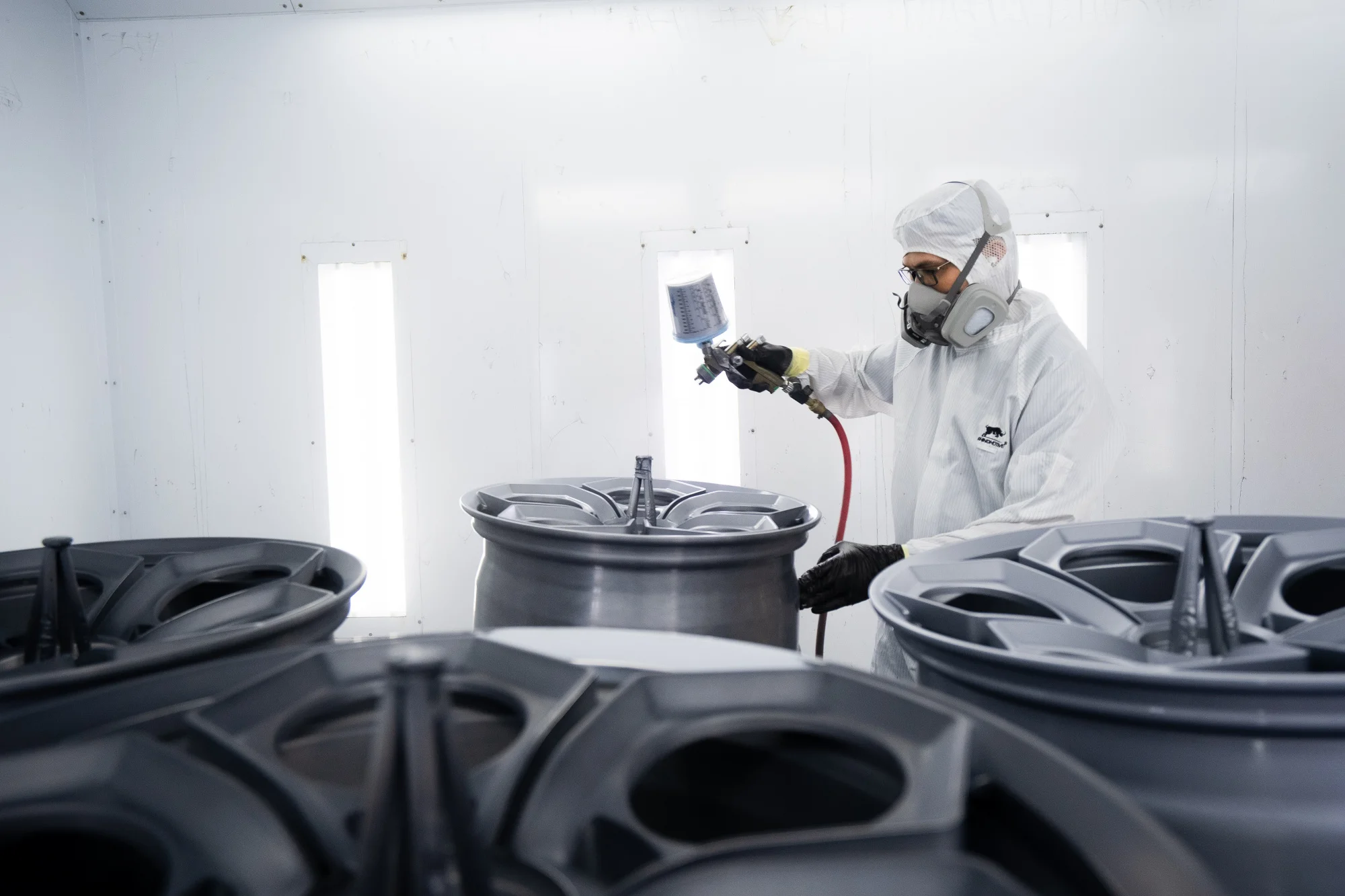
A Dubai workshop suitable for a premium vehicle should explain its protected working area, storage conditions, technician experience, equipment, access procedures, and vehicle-handling rules before accepting the car.
Dubai makes controlled premises especially relevant. Heat, dust, direct sun, and exposed parking can affect preparation work and the condition of a car held between stages. Ask whether it stays indoors, where keys are kept, who may move it, and whether it can be left outside during workshop custody.
Assess the premises before booking
Look at the place where the car will actually be worked on, not just the reception area. A protected indoor bay, controlled access, clean surfaces, suitable lighting, and a defined movement process are checkable criteria.
Request direct answers on:
- Is the vehicle kept indoors before, during, and after the work?
- Who is authorised to move the car?
- Where are keys stored during workshop custody?
- Is there a documented vehicle-entry and vehicle-release process?
- How does the provider manage dust, heat, and outdoor exposure?
- Is final quality control completed before collection?
The workshop environment affects the result through process control. Paint inspection, polishing, coating preparation, and interior work need different conditions from a quick exterior clean in an open parking area.
Check experience and equipment, not slogans
Ask for proof that technicians have worked with comparable body shapes, materials, finishes, and access limits. Previous work is useful when it shows the process. A polished final photograph is not the whole story.
Relevant equipment includes inspection lighting, paint-measurement tools where needed, polishing systems, dedicated wheel tools, interior tools, extraction equipment, and safe access for low-clearance cars. You don't need a lecture on each machine. You do need to know what will touch the vehicle.
DEIZ GARAGE describes itself as a Dubai workshop for luxury, sports, and high-performance vehicles. It also states that work is handled under one roof, rather than outsourced to contractors. The owner's practical question is simpler: who does each stage, and who remains responsible throughout the job?
A workshop with a defined workflow works one way. An arrangement where tasks move between unnamed parties works differently. The first gives the owner a clearer route for approval, questions, and final inspection.
But polished language isn't proof. Ask to see the process in writing.
Verify products, coating specifications, and aftercare requirements
Request the brand, exact product name, intended surface, preparation method, layer count where applicable, warranty terms, and aftercare instructions before any protection product is applied.
Ceramic coating is a surface-protection treatment applied to prepared vehicle surfaces. It is not a permanent coating and should not be sold as one. Its suitability depends on preparation, included surfaces, product specification, and the owner's future care routine.
| Field to verify | What the provider should state | Why it affects the decision |
|---|---|---|
| Product brand | Manufacturer name | Lets the owner identify the system being offered |
| Exact product name | Specific coating, cleaner, conditioner, or polish | Prevents a generic product category from replacing the agreed product |
| Application area | Paint, wheels, glass, trim, leather, or other specified surface | Defines what is and is not protected |
| Preparation scope | Cleaning, decontamination, correction, or other agreed preparation | Determines whether the surface is ready for the treatment |
| Layer count | Number of ceramic coating layers, where the system uses layers | Makes the application scope measurable |
| Stated durability or warranty | Written terms and conditions | Separates a warranty statement from an open-ended promise |
| Aftercare requirements | Washing, inspection, update, or maintenance instructions | Helps the owner preserve the stated treatment conditions |
The client data lists GYEON ceramic coating with a 10-year warranty in one offering. It also lists a ceramic coating option with a 1-year warranty and an update after 6 months. Another option has a 3-year warranty and an update every 6 months. These are separate service specifications, not interchangeable labels.
Warranty length does not describe the whole result. It depends on the named product, preparation, covered surfaces, stated conditions, and aftercare requirements. Put each item in the service order.
RUPES tools are identified for paint correction. If a workshop quotes an equivalent product instead, ask for that product's exact name and approve the substitution in writing before work begins.
Do not accept vague protection claims
Treat phrases such as "maximum gloss," "full protection," or "lifetime finish" with care when they are not tied to named materials and defined work. They sound reassuring. They don't tell you what the workshop will do.
A proper specification answers five practical questions:
- What product will be used?
- On which surfaces will it be applied?
- What preparation is included?
- How many layers will be applied, if applicable?
- What care is required after delivery?
That is enough for a fair comparison. Anything less is fog.
Document the car’s condition before handover
Complete a pre-service inspection with photographs, video, written notes, and confirmation by both parties before the vehicle enters workshop custody.
Pre-service inspection refers to the documented condition check completed before the workshop begins work. It protects the owner and the provider because it separates existing marks from issues that may arise during service.
The record should cover paint, bumpers, splitters, wheels, tyres, glass, lights, badges, door edges, mirrors, interior surfaces, seats, steering wheel, screens, trim, roof lining, luggage area, odometer reading, fuel level, warning lights, and supplied accessories.
A practical pre-service inspection sequence
- Walk around the vehicle with a workshop representative.
- Photograph every side of the car and take close-ups of visible defects.
- Record scratches, chips, dents, curb marks, cracks, stains, worn leather, missing items, and warning messages.
- Film a short continuous video of the exterior, interior, odometer, and vehicle keys.
- Mark each defect by panel or precise location in the inspection record.
- Attach the record to the service order and obtain confirmation from both parties.
- Keep a digital copy before leaving the premises.
Date-stamped images help connect the record to the handover date. Clarity matters more, though. A close-up may show that a mark exists, but it won't prove its location without a panel reference.
The record should identify delicate materials too. Matte paint, satin trim, carbon-fibre parts, Alcantara, special leather finishes, aftermarket bodywork, and existing PPF should be visible before work starts.
Quality control at delivery matters as well. DEIZ GARAGE lists quality control and a delivery briefing as part of its process. Use that point to compare the car with the service order and pre-service inspection. Don't rush it in the driveway.
Check insurance, liability, and handover responsibility
Before leaving a premium vehicle, request written confirmation of the insurance arrangement, responsible business entity, workshop custody scope, exclusions, notification rules, and the procedure if damage is found.
Do not assume a workshop's general insurance wording answers every question about a customer's vehicle. Ask what policy or confirmation applies while the car is parked, moved, serviced, stored, or test-driven, if a test drive forms part of the agreed work.
| Item to request | Question to ask | Document or evidence to retain |
|---|---|---|
| Insured business name | Which legal entity accepts the vehicle? | Current written confirmation matching the service order |
| Policy status | Is the relevant cover active for the service period? | Certificate or insurer-issued confirmation |
| Workshop custody scope | Does the stated arrangement cover the car while it is stored and handled? | Written description of the scope |
| Vehicle movement | Who may move the vehicle and for what purpose? | Handover procedure or service order clause |
| Exclusions | Which events, vehicle uses, or activities are excluded? | Written exclusions or terms |
| Damage process | Who must be notified, how quickly, and in what format? | Contact details and written procedure |
| Responsibility | Which party is responsible for the vehicle during workshop custody? | Named responsible party in the service order |
This is not paperwork for paperwork's sake. Responsibility becomes harder to establish when the handover record, service scope, and custody terms point in different directions.
Read exclusions carefully. A broad waiver, an unsigned inspection record, or permission for unspecified third parties to move the vehicle creates uncertainty when clarity is needed most.
Ask one direct question: "If damage is identified while my car is in your workshop custody, what written process applies from notification to resolution?" If the response is vague, pause the booking.
Extra checks for supercars and Porsche or Ferrari owners
A supercar needs additional checks for access, clearance, delicate materials, specialist handling, and documented limitations before work begins. Porsche and Ferrari owners should ask for process evidence relevant to their own vehicle, rather than relying on the badge alone.
A low front splitter, exposed carbon fibre, matte paint, gloss-black trim, Alcantara, sensitive leather, and complex wheel designs change the handling plan. The workshop should identify limitations before accepting the car, not after it is already inside the bay.
| Check area | Premium vehicle | Supercar, Porsche, or Ferrari focus |
|---|---|---|
| Entry and parking | Confirm indoor storage and vehicle movement rules | Confirm ramp angle, clearance, turning space, and splitter protection |
| Bodywork | Record existing paint and trim condition | Record carbon fibre, aero parts, vents, diffusers, badges, and low body panels |
| Paint correction | Agree correction scope | Request a test area and conservative plan for delicate or unusual finishes |
| Interior | Identify leather, trim, and screens | Identify Alcantara, carbon trim, special stitching, and heritage materials |
| Wheels and brakes | Define wheel-cleaning scope | Confirm access around large wheels, brake components, and tight spokes |
| Technician experience | Request relevant examples | Ask for work examples involving comparable body shape and materials |
Ask whether the car will be driven inside the premises, moved between bays, lifted, transported, or parked outdoors at any point. Clearance is not a minor detail. It determines whether a routine movement becomes a risk.
For Porsche or Ferrari vehicles, request evidence of work on similar materials and body configurations. The workshop does not need to claim factory approval or brand affiliation. It needs to explain the process for your car.
A familiar badge is not a handling plan. Ask about the actual vehicle: its finish, modifications, protective film, access limits, and pre-existing condition.
Final pre-booking checklist for premium detailing in Dubai
Do not approve the booking until every relevant point below has a written answer, document, or comparison basis.
| Area | Check before booking |
|---|---|
| Service scope | Confirm every included and excluded item in the detailing package |
| Vehicle objective | State whether the goal is appearance improvement, preservation, sale preparation, or interior restoration |
| Workshop conditions | Verify indoor work and storage, access control, key handling, and Dubai heat and dust exposure procedures |
| Technician process | Request relevant vehicle examples and an explanation of the proposed work stages |
| Products | Obtain brand and exact product names for paint, interior, and protection treatments |
| Ceramic coating | Record preparation, surfaces, layer count, warranty terms, and aftercare requirements |
| Pre-service inspection | Complete photographs, video, written defect notes, odometer record, and signed confirmation |
| Workshop custody | Identify who may move the vehicle and where it will be stored |
| Insurance and responsibility | Request written insurance confirmation, exclusions, responsible party, and damage-notification process |
| Supercar handling | Confirm ramp clearance, parking, splitter protection, sensitive materials, and service limitations |
| Delivery | Book time for final quality control and a delivery briefing |
FAQ
What is included in a premium detailing package in Dubai?
A premium detailing package should state its exterior, interior, paint-correction, protection, and final quality-control scope in writing. It may include detailing wash, engine detailing, paint correction, interior cleaning, leather conditioning, ceramic coating, and a delivery briefing. Confirm every inclusion and exclusion in the service order.
How do I check whether a detailing workshop is suitable for a supercar?
Check indoor storage, access controls, low-clearance entry procedures, technician experience with comparable vehicles, specialist equipment, and pre-service inspection standards. Ask who can move the car, whether it stays indoors, and how the workshop handles splitters, carbon fibre, Alcantara, and other sensitive materials.
Which product details should I request before ceramic coating is applied?
Request the product brand, exact product name, surfaces covered, preparation process, layer count, warranty terms, curing or aftercare instructions, and maintenance requirements. Attach the specification to the service order before application starts.
How many ceramic coating layers should be stated in the service order?
The service order should state the exact number of ceramic coating layers when the selected system uses layers. It should also identify the surfaces receiving each layer. "Ceramic protection included" is not a sufficient application specification.
How should existing paint damage be documented before detailing?
Document existing paint damage with dated photographs, a continuous walk-around video, written notes, and panel-by-panel location references. Attach the pre-service inspection to the service order and retain a copy signed or confirmed by both parties.
Who is responsible if a car is damaged while it is at a detailing workshop?
The service order should identify the party responsible during workshop custody and explain the notification and resolution process. Do not rely on verbal assurances. Request written responsibility terms, insurance confirmation, exclusions, and a damage-reporting procedure before handover.
How can I verify workshop insurance before leaving my car?
Request current written insurance confirmation showing the insured business name and relevant coverage period. Ask what applies while the vehicle is stored, moved, and serviced. Keep that confirmation with the service order and pre-service inspection record.
