Ceramic coating should be ordered only after the car's finish condition, preparation scope, installer process, written warranty terms, maintenance plan, and total cost have been checked side by side. The protective layer can support a well-presented original finish, but it cannot correct neglected clear coat, erase scratches, or guarantee a resale price. Paint value is the appearance and resale-condition value supported by well-preserved, documented paintwork. The better decision is usually the less glamorous one: inspect first, approve paint correction only where needed, then compare written proposals rather than package names.
Ceramic coating is a protective layer applied after preparation to support paint presentation and routine cleaning. It is not paint-protection film, and it should not be sold as protection from every form of damage. A deep scratch, impact mark, or underlying paint failure remains a paint issue, not a coating issue.
What ceramic coating should be checked for when paint value is the priority
A paint-value-focused ceramic coating decision starts with the condition of the original finish, not the promised finish after handover. The owner needs a clear written separation between inspection, paint correction, preparation, application, and maintenance. If those stages are bundled into one vague package, it is difficult to know what the car will actually receive.
The first question is simple: what is being preserved? If the answer is original clear coat with minimal visible defects, the proposal should show how that condition was assessed and what preparation is planned. If the finish already has swirl marks, oxidation, light scratches, or uneven gloss, application alone may leave those defects visible beneath the new layer.
A ceramic coating affects paint value through presentation and maintainability. Better surface preparation can make the finish look more consistent, while poor preparation can preserve defects in plain sight. It is a bit like putting clear glass over a photograph with fingerprints still on it. The glass may be clean. The image beneath it is still compromised.
What the service should and should not promise
A coating proposal should state the treated areas, preparation stages, curing process, written warranty terms, maintenance requirements, exclusions, and handover procedure. Ask for these points before booking, not after the vehicle has entered the studio.
Ceramic coating can be compared with paint-protection film where impact exposure is the concern. Ceramic coating supports the finish through surface protection and care. Paint-protection film addresses a different risk category. Treating one as a substitute for the other creates the wrong expectation from the start.
Paint-condition assessment before ceramic coating
Paint-condition assessment should identify visible defects, previous paintwork, and clear-coat risk before the service is approved. The owner should request inspection evidence, including photographs in suitable lighting and paint thickness measurement where repair history or aggressive correction may be relevant.
Paint correction is corrective polishing completed before coating application to reduce visible defects in the clear coat. It is not a full repaint, and it should not be treated as an automatic inclusion in every ceramic coating quote.
Start with an inspection when the car is clean enough for defects to be seen. Swirl marks, light scratches, oxidation, staining, dull patches, edge wear, and inconsistent reflections should be recorded. So should evidence of previous repainting, panel repairs, stone-chip touch-ups, paint-protection film, and older coatings.
A good inspection protects both sides. The owner has a record of the vehicle's starting point, and the detailer can set a preparation scope that matches the car rather than guessing from its age or badge.
| Inspection finding | What it may mean | Pre-order decision | Evidence to request |
|---|---|---|---|
| Swirl marks visible in inspection lighting | The clear coat may need paint correction for a more even finish | Discuss correction polishing before application | Close-up photos and written condition notes |
| Light scratches | Some marks may remain visible if preparation is limited | Ask which defects can be reduced and which will remain | Marked photographs of affected panels |
| Oxidation or dullness | The finish may require a separate assessment before protection work | Request a preparation recommendation before approving coating | Panel-by-panel inspection record |
| Uneven paint readings or signs of repair | Previous work may affect the correction approach | Ask for paint thickness measurement and limits on correction | Measurement record and written scope |
| Paint already in good visual condition | Preparation may focus on cleaning and final inspection rather than corrective polishing | Confirm that correction is not being charged by default | Pre-service photographs and scope confirmation |
When paint correction belongs in the quote
Paint correction should be discussed separately when the owner wants visible defects addressed before coating application. The decision depends on the finish condition, the level of finish expected, and what the inspection can support. A studio cannot responsibly promise a correction result before seeing the panels.
What should stop a booking? A proposal that says "ceramic coating" but does not identify the car's existing condition. Another warning sign is a price that includes "polishing" without explaining whether it is light polishing, corrective polishing, or simply a finishing step.
Inspection & diagnostics should be more than a formality. It determines the work plan: defects affect preparation, preparation affects the final appearance, and final appearance affects how the car presents to a future buyer.
No shortcuts here.
Preparation scope: compare what is included before coating application
A coating-only quote and a preparation-inclusive quote are not the same product. The first may describe application. The second should show how the finish is washed, assessed, cleaned, polished where agreed, checked, and prepared for the ceramic coating.
The written scope should separate each stage. "Preparation" is too broad to compare on its own. A detailing wash, detailing polishing, light polishing, inspection, and final quality control each answer different questions about the finished car.
| Preparation item | What the owner should confirm | Why it matters to paint value |
|---|---|---|
| Inspection & diagnostics | Is the paint condition recorded before work starts? | Documentation helps distinguish existing defects from later concerns |
| Detailing wash | Is this a listed stage rather than an assumed extra? | A clean surface allows meaningful inspection and preparation |
| Paint thickness measurement | Is a clear-coat thickness check included where repair history is suspected? | It informs the safe scope of paint correction |
| Light polishing | Is it described as light polishing, with its purpose stated? | It prevents a vague polishing line from masking a limited scope |
| Detailing polishing | Is this quoted separately from application? | Paint correction and coating application are different types of work |
| Final inspection | Who checks the finish before delivery, and how is handover handled? | The owner can verify the result against the original condition record |
The sequence matters. Paint thickness measurement belongs before corrective polishing is approved, not as an afterthought once the panels have been worked. The measurement helps frame the conversation about original finish, previous repairs, and the level of correction that is sensible for the car.
A coating-only scope works one way: it focuses on applying the product. A preparation-inclusive scope works differently: it defines the condition of the surface before product application. Neither is automatically wrong, but they should never be compared as if they were identical.
Omissions that deserve a follow-up question
Ask for clarification if a quote does not state any of the following:
- Whether inspection & diagnostics happens before pricing is final.
- Whether paint correction is included, excluded, or subject to approval.
- Whether paint thickness measurement is used when needed.
- Whether detailing wash and surface preparation are separate line items.
- Whether final inspection takes place before delivery.
- Whether interior work, engine detailing, or ceramic wash appears as a separate service rather than being implied.
A clean surface is not necessarily a corrected surface. That distinction saves arguments later.
How to compare professional detailers before booking
A professional detailer should be compared by the inspection process, written scope, controlled application conditions, evidence of completed work, and handover discipline. A package name is not enough. The owner needs to know how the studio decides what the finish requires and who is responsible for the vehicle through delivery.
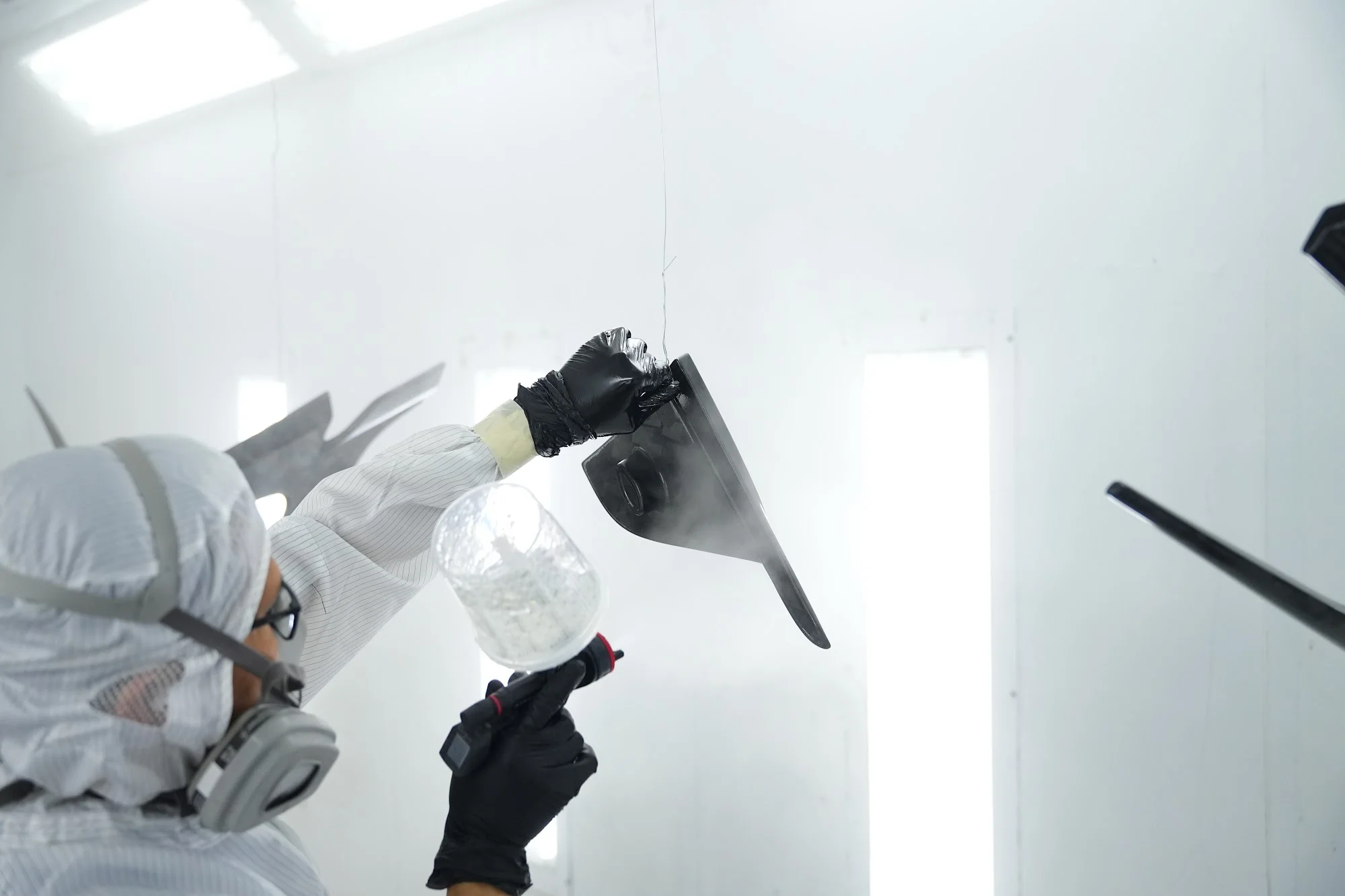
The documented project process has four stages: inspection & diagnostics; clear scope, estimate, and timeline; production, installation, and finishing; then quality control with a delivery briefing. This sequence is useful because it makes the decision trail visible. The owner can see when the scope was set and when the result was checked.
DEIZ states that it does not outsource to contractors and keeps work under one roof. For a paint-value-focused owner, the practical question is not whether that sounds impressive. It is whether the same accountable team can explain inspection findings, preparation choices, application, and handover notes.
| Comparison point | Detailed written proposal | Package-name-only quote |
|---|---|---|
| Paint condition | Notes the inspection findings and open questions | May not explain the starting condition |
| Preparation | Separates washing, correction polishing, and inspection | May group all work under one label |
| Controlled application conditions | Explains where and how the coating will be applied and cured | May only state that the service is indoor |
| Timeline | Shows expected stages and delivery plan | May provide a broad completion promise |
| Warranty | Includes written warranty terms and maintenance duties | May show only a duration |
| Handover | Identifies quality control and delivery briefing | May not describe the final inspection |
Questions to ask before authorising work
Ask these questions in writing. The answers should match the estimate.
- What did the paint inspection show, panel by panel?
- Is paint correction included, and what result is realistically expected?
- Will paint thickness measurement be used before corrective polishing where needed?
- What controlled application conditions are provided during application and curing?
- Who performs final quality control before handover?
- What does the delivery briefing include?
- Which maintenance visits or ceramic wash services are expected after delivery?
- What are the written warranty terms, exclusions, and owner responsibilities?
Customer feedback can be useful, but read it for specifics. Look for references to preparation quality, communication about defects, final inspection, and aftercare. A five-star rating without any description is pleasant background noise. It is not evidence of process.
Dubai and UAE conditions: maintenance requirements after coating
For vehicles exposed to heat, dust, outdoor parking, and frequent driving in Dubai or elsewhere in the UAE, maintenance must be agreed before the ceramic coating is ordered. The owner should confirm washing method, wash frequency, inspection intervals, contamination response, and the actions that could affect written warranty terms.
Maintenance is not optional by default. It is the operating plan for the treated surface after delivery. Dust left on the finish and then wiped aggressively can create avoidable marking, while inconsistent washing can make it harder to judge whether the issue concerns the coating or the clear coat beneath it.
The available service descriptions list a ceramic coating with a 1 year warranty, update after 6 month, and another with a 3 years warranty, update evey 6 month. These are specific service descriptions, not universal warranty standards. The owner should ask what an "update" includes, whether it is mandatory, what it costs, and what happens if the appointment is missed.
Match aftercare to how the car is used
A regularly driven vehicle and a collector car with limited use need different maintenance planning. The regularly driven car may require a clearer wash routine because it faces more routine exposure. A collector car may need a plan for dust, storage periods, and inspection before a major event or sale.
The aftercare plan should state:
- How the vehicle should be washed.
- Whether ceramic wash is recommended or required.
- When the coating should be inspected.
- Which products or wash methods are excluded by written warranty terms.
- How the owner should report staining, loss of water behaviour, or visible changes.
- Whether updates after six months are part of the service scope or a separately priced visit.
Heat and dust do not make a coating useless. They make vague aftercare less useful. The difference is small on paper and large over time.
Budgeting: compare ceramic-coating quotes by total scope
The meaningful price is the total approved scope, not the ceramic service line alone. A low headline figure can exclude inspection, paint correction, detailing wash, final quality control, or maintenance. A higher figure may include services the owner does not need. Comparison begins when every item is placed on the same sheet.
The project price list includes ceramic coating with a 1 year warranty, update after 6 month at dh1,200.00, dh1,300.00, dh1,400.00, and dh1,500.00, with a stated timeline of 12 hours. It also lists a ceramic coating with a 3 years warranty, update evey 6 month at dh1,800.00, dh1,900.00, dh2,000.00, and dh2,100.00, with a stated timeline of 48-72 hours.
Those figures should be read as service lines, not as a shortcut to choosing a package. Vehicle size, condition, preparation requirements, and the agreed scope determine what the owner is actually approving.
| Cost area | What must be shown in writing | Comparison risk if omitted |
|---|---|---|
| Coating application | Coating service name, coverage, warranty wording, and timeline | The owner compares duration labels instead of service scope |
| Inspection | Whether inspection & diagnostics is included before work starts | Existing defects may be undocumented |
| Paint correction | Whether light polishing or detailing polishing is included, excluded, or provisional | The final invoice may change after drop-off |
| Preparation | Detailing wash and other listed preparation work | A quote may appear cheaper because preparation is outside it |
| Interior and engine work | Engine detailing, interior dry cleaning, leather conditioner, if selected | Optional services can be mistaken for coating requirements |
| Maintenance | Ceramic wash, update visits, and their status in the proposal | The owner may discover recurring obligations later |
The project also lists a new-car detailing package for small and medium cars, and a separate new-car detailing package for SUV/VAN cars. New does not automatically mean ready for coating. Transport handling, dealer preparation, storage, and previous washing can still affect the condition seen during inspection.
How to control cost changes
Approve a change process before work begins. The detailer should identify what can trigger extra paint correction, who authorises it, how the added amount is documented, and whether the owner can decline the additional work.
One project package lists detailing wash at 170.0, engine detailing at 290.0, detailing polishing at 1900.0, interior dry cleaning plus leather conditioner at 800.0, and ceramics for three years at 1900.0. Its stated total is 5060, with a discounted figure of 4554 and a deadline of 3 FULL WORKING DAYS.
Another package lists detailing wash at 210.0, engine detailing at 330.0, detailing polishing at 2100.0, interior dry cleaning at 950.0, and ceramics for three years at 2100.0. Its stated total is 5690, with a discounted figure of 5121 and the same deadline of 3 FULL WORKING DAYS.
These examples show why the ceramic service line cannot carry the whole comparison. Interior work, engine detailing, polishing, and wash stages change the total. A buyer protecting paint value should first decide which items are needed for the finish, then treat unrelated services as separate choices.
Where service decisions usually go wrong
The recurring mistake is not choosing the wrong bottle. It is approving the wrong scope.
A car with visible defects receives the protective layer without a paint-correction discussion. The service may make the finish look glossier, but the owner is left with the same defects beneath it. The issue happens because appearance expectations were set before condition was documented.
Another mistake is treating a warranty period as proof of protection. Duration alone does not explain covered failures, owner duties, update visits, exclusions, labour, or reapplication. Written warranty terms determine the useful meaning of a warranty.
Then there is the budget trap. A coating-only number looks neat, while inspection, polishing, and maintenance remain outside the conversation. By the time those items appear, the owner has already mentally committed. That is how a simple quote turns into a moving target.
What should the owner do instead? Stop at the first unclear point. Ask for the inspection record, scope, cost line, and aftercare requirement. If the answer cannot be put in writing, it cannot be compared properly.
Final comparison checklist before ordering ceramic coating
Complete these checks before approving a ceramic coating service. The first items have the strongest effect on paint-value protection because they establish the car's starting condition and the work required before application.
| Priority | Check before booking | Evidence to collect | Stop and clarify when |
|---|---|---|---|
| 1 | Paint condition | Inspection photographs, defect notes, and paint thickness measurement where relevant | The detailer cannot explain visible defects or previous paintwork |
| 2 | Paint correction scope | Written statement of light polishing or detailing polishing, if needed | Correction is implied but not priced or described |
| 3 | Preparation scope | Listed detailing wash, inspection, cleaning, and final inspection stages | The quote only names a coating package |
| 4 | Installer process | Timeline, controlled application conditions, quality control, and delivery briefing | No one can explain who checks the car before handover |
| 5 | Written warranty terms | Duration, exclusions, update requirements, labour, and maintenance duties | The warranty is described verbally only |
| 6 | Aftercare plan | Ceramic wash guidance, inspection schedule, and update visits | Maintenance is called optional without written confirmation |
| 7 | Total budget | Itemised costs and approval process for extra work | Correction or preparation can be added without authorisation |
Minimum acceptable documentation includes a written service name, price, timeline, and warranty wording. A fully documented proposal goes further: it records paint condition, separates preparation from coating application, identifies maintenance commitments, and includes a clear approval route for additional paint work.
That second version is the one worth comparing.
FAQ
ceramic-coating checks before ordering
What should I check before ordering ceramic coating to protect paint value?
Check the paint condition, inspection evidence, paint-correction requirement, preparation scope, installer process, written warranty terms, maintenance obligations, and total cost. Do not approve a coating service until existing swirl marks, scratches, oxidation, or previous paintwork have been discussed and recorded.
What warranty should I expect for ceramic coating?
Request written warranty terms that state the duration, covered coating failures, exclusions, owner maintenance duties, update requirements, labour responsibility, and reapplication process. The available service descriptions include a 1 year warranty with an update after 6 month, and a 3 years warranty with an update evey 6 month.
What maintenance should I check before ordering ceramic coating?
Confirm the wash method, ceramic wash requirements, inspection intervals, update visits, and actions that may affect written warranty terms. For Dubai and UAE use, discuss heat, dust, outdoor parking, and how the vehicle is actually driven before agreeing to the aftercare plan.
