
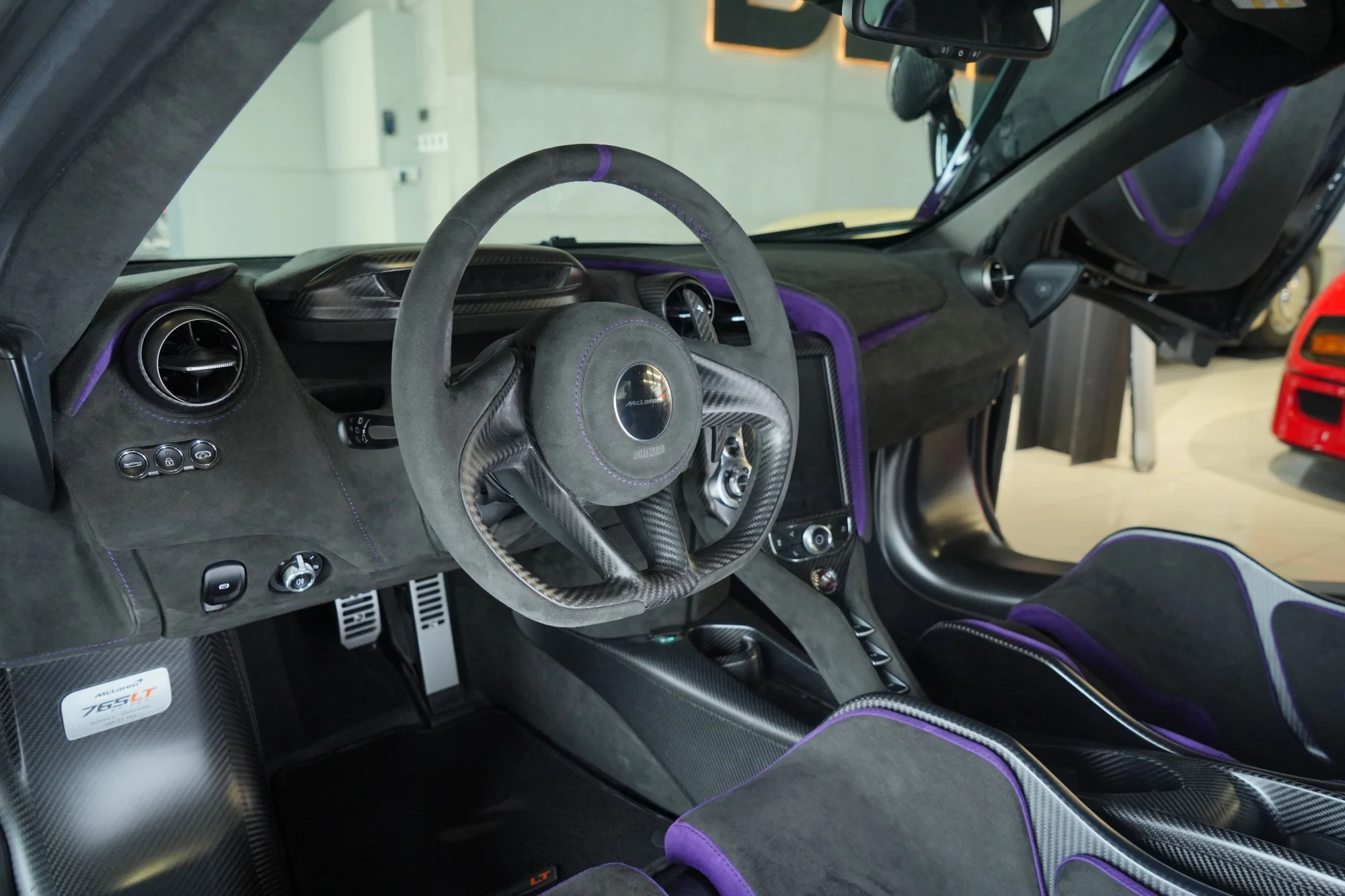
Interior reupholstery is worth ordering when the visible seat covering or trim is worn, damaged, uncomfortable, or inconsistent with the condition you need the vehicle to present. It is not a cosmetic decision alone. BMW and Mercedes seats may contain seat-mounted airbags, occupant classification systems, heating elements, ventilation hardware, memory controls, and wiring. A new cover can improve the cabin; careless removal or reassembly can create a warning light, a non-functioning seat feature, or an unresolved safety concern.
Interior reupholstery is the replacement or renewal of visible upholstery materials, including seat coverings, door-panel inserts, headliners, and similar trim surfaces. Interior restoration refers to broader work that also renews foam, mechanisms, carpet, dashboard trim, hardware, or other cabin components.
Is reupholstery worth ordering for this vehicle?
Interior reupholstery is usually justified when the vehicle has localized wear that affects daily use, customer-facing presentation, or resale appeal, while the seat structure and electronics remain serviceable. For a Dubai BMW or Mercedes owner, account for vehicle downtime as carefully as the intended finish.
Start by separating the visible problem from the underlying one. Worn leather on a bolster is a seat-covering issue. A collapsed cushion, broken adjuster, warning indicator, or loose seat frame is not. New upholstery does not correct damaged foam, a loose frame, or a faulty mechanism. These faults should be repaired before the new cover is fitted.
| Condition found | Appropriate decision path | What to verify first |
|---|---|---|
| Small tear, split seam, or worn bolster | Partial upholstery replacement or targeted repair | Matching material, panel boundaries, foam condition |
| Multiple worn seat panels | Full seat upholstery replacement | Stitching pattern, colour, perforation, seat functions |
| Worn seats plus door panels, headliner, trim, or carpet | Interior restoration | Scope by component, material consistency, downtime |
| Seat warning light, failed adjustment, damaged wiring, or deployed airbag | Diagnostic or safety-related inspection before upholstery approval | Manufacturer procedures, fault findings, repair responsibility |
A full interior retrim is broader than recovering one seat. According to the DEIZ GARAGE Full Interior Reupholstery service page, the service covers seats, door panels, steering wheel, headliner, and trim. That scope changes labor, materials, vehicle downtime, and the risk of hidden issues appearing after disassembly.
Ask these questions before collecting estimates:
- Is the issue limited to the seat covering, or does the foam, frame, mechanism, or wiring need attention?
- Will the vehicle remain in service during the process, or will the business need substitute transportation?
- Does the planned finish need to preserve the current factory appearance, or is a custom result acceptable?
- Is the objective a targeted repair, a full interior retrim, or wider interior restoration?
- Does any seat warning indicator, adjustment function, heating function, or ventilation function currently fail?
The cheapest-looking option is not always the lower-cost choice. A narrow repair can be sensible when surrounding material is sound. It works differently fr om an interior restoration, wh ere several aging surfaces may make a partial repair look out of place.
Define the reupholstery job before requesting quotes
A written scope of work is a reliable basis for comparing interior reupholstery quotes. "Redo the interior" is not a scope. It is an invitation for two workshops to price two entirely different jobs.
Document the current condition before the vehicle is handed over. Photograph each seat, door panel, console, steering wheel, headliner, and trim piece included in the request. Record scratches, tears, loose trim, warning lights, stains, and existing electronic faults. This protects both sides because pre-existing damage can otherwise be mistaken for damage caused during the process.
What the work order should identify
- Each component included: front seats, rear seats, door panels, armrests, headliner, carpet, console, dashboard trim, or steering wheel.
- The distinction between seat upholstery and repairs to foam, frames, mechanisms, or mounting hardware.
- The selected material, colour, grain, stitching, perforation, piping, and trim finish.
- Required removal and reinstallation operations.
- Existing defects found before disassembly.
- Excluded tasks and the approval process for newly discovered damage.
- Expected vehicle downtime and handover condition.
| Scope item | Specify in writing | Why it matters |
|---|---|---|
| Seat upholstery | Panels replaced, stitching design, material specification | Determines the visible finish and labor content |
| Foam and padding | Repair, replacement, or no work included | Foam condition determines whether the new cover sits correctly |
| Seat mechanisms | Adjustment, lumbar, recline, memory, or frame issues | Mechanical faults are separate from cosmetic upholstery work |
| Door panels and trim | Inserts only or full panel service | Prevents an incomplete colour or grain match |
| Electronics | Features tested before and after service | Defines responsibility for functional checks |
Small details decide the result. A black material can differ in sheen, grain, and warmth. "Black" is not a specification.
Choose materials and confirm colour and trim matching
Material selection should be based on expected use, climate exposure, cleaning routines, and the vehicle’s existing trim. OEM material means original-equipment material or factory-spec material. Aftermarket material means a non-OEM replacement material; it should be identified by its documented specification, not described as "OEM-equivalent" without evidence.
| Material category | Durability considerations | Comfort considerations | Questions for the workshop |
|---|---|---|---|
| Leather | Check surface finish, abrasion resistance, repairability, and care needs | Usually offers a natural feel and can change with temperature | What is the material specification, grain, finish, and care requirement? |
| Synthetic leather | Confirm backing quality, heat response, seam performance, and cleaning compatibility | Can feel less breathable during long drives or hot weather | Is it suitable for the seat design and the intended vehicle use? |
| Fabric | Review wear resistance, stain behavior, and edge stability | Often offers good grip and a less temperature-sensitive surface | How will it wear against the existing door panels and armrests? |
| Suede-like material | Check cleaning limits, pile direction, and potential marking | Can offer grip and a distinctive tactile finish | Where is this material appropriate, and where will it show wear first? |
| Specialty trim | Confirm compatibility with trim shape, adhesives, and adjacent materials | Comfort depends on the surface and placement | Will it interfere with switches, seams, perforation, or moving parts? |
Request a physical sample when the finish must match existing factory trim closely. Photographs are useful, but camera settings can flatten grain and shift colour. A swatch in daylight and inside the cabin gives a better basis for approval.
The work order should state the material brand or supplier where available, colour reference, grain, perforation pattern, thread colour, stitch type, and any piping or embossing. Colour matching affects perceived quality through contrast: a close match can make partial work disappear, while a slightly different grain can make a new panel look isolated.
Check airbag, occupant-safety, and electronic-system risks
Seat work should be treated as safety-sensitive whenever the seat contains a seat-mounted airbag, occupant classification system, seatbelt-related component, or electrical function. Cosmetic upholstery work must not be approved as if it were separate from these systems. It isn't.
Before removing or opening a seat, ask the workshop to identify installed features and the manufacturer procedure that applies to that vehicle. BMW and Mercedes-Benz use model-specific seat designs and equipment combinations, so an assumption based on brand name alone is weak evidence.
Ask for these pre-work confirmations
- Which seat-mounted airbags, occupant classification systems, seatbelt components, and electrical connectors are present?
- Which seat functions will be disconnected or disturbed during the process?
- Who will perform any required diagnostic checks, and what equipment will be used?
- Will the workshop document warning indicators and seat functions before disassembly?
- Will subcontractors handle upholstery, electronics, or safety-related tasks?
After reassembly, request confirmation that seat adjustment, memory, heating, ventilation, lumbar support, warning indicators, and affected controls were checked. Request diagnostic confirmation where the workshop’s procedure requires it. A functioning seat switch does not prove that every safety-related circuit has been assessed.
Use the BMW or Mercedes-Benz model-specific repair procedure for the vehicle. A workshop should not replace verified model-specific instructions with a general habit.
Do not proceed without the applicable manufacturer procedure and documented post-reassembly checks.
Compare workshops, documentation, and warranty terms
Choose a workshop on documented capability, not on its gallery alone. A polished photo can show stitching. It cannot show how the provider handled seat electronics, recorded pre-existing defects, or responded when a panel did not match.
Ask for photographs of comparable completed BMW or Mercedes projects, including close-ups of seams, perforations, bolsters, door-panel transitions, and trim edges. Independent reviews can indicate consistency, though they should be read for details rather than treated as proof by themselves.
Use the workshop process as a comparison question. Ask whether its sequence includes inspection and diagnostics; clear scope, estimate, and timeline; production, installation, and finishing; followed by quality control and delivery briefing. Also ask whether upholstery, diagnostics, and safety-related tasks are performed in-house or assigned to subcontractors. Different operating models can work, but responsibility should be clear before the vehicle is handed over.
| Comparison point | Evidence to request | What should be clear |
|---|---|---|
| Relevant experience | Comparable completed-project photographs | Similar seat type, trim complexity, and finish quality |
| Staffing | Names or roles of in-house staff and subcontractors | Who handles upholstery, diagnostics, and safety-related tasks |
| Documentation | Inspection record, photographs, written scope | Condition before service and agreed result |
| Workmanship warranty | Duration, covered defects, exclusions, claim process | What the workshop will correct and how a claim is made |
| Material warranty | Supplier terms, if any | Whether the material supplier provides separate coverage |
A workmanship warranty covers the workshop’s own labor. A material warranty, if one exists, concerns the material supplier’s terms. They are not interchangeable.
Approval errors that become expensive later
Ordering mistakes can begin before the first stitch is sewn. They happen because the owner approves an appearance outcome without defining the effort behind it.
- Approving a vague scope. The consequence is a quote that cannot be compared fairly. Prevent it with a component-by-component work order.
- Choosing material by appearance alone. The consequence may be poor comfort, cleaning difficulty, or premature visible wear. Compare use conditions, heat exposure, finish, and care requirements.
- Ignoring the seat-mounted airbag and electronics. The consequence can be unresolved warning indicators or non-functioning seat features. Require pre-work and post-work checks.
- Comparing only total prices. The consequence is discovering exclusions after disassembly. Compare materials, repair assumptions, diagnostics, downtime, and change-order rules.
- Skipping portfolio and review checks. The consequence is having no evidence that the provider has completed comparable projects. Ask for relevant photographs and documented examples.
The sensible approval test is simple: could another workshop read the work order and understand exactly what must be delivered? If not, the scope is still too loose.
FAQ
Questions to ask before authorizing BMW or Mercedes reupholstery
Is interior reupholstery worth it for localized seat damage?
Yes, when the damage is limited, the rest of the interior remains presentable, and the vehicle will stay in service long enough for the improvement to matter. Ask for a targeted repair option before approving full seat upholstery replacement.
What should be included in a written reupholstery quote?
The quote should identify included components, material specification, labor, excluded work, diagnostics where applicable, approval rules for additional work, downtime, payment terms, and workmanship warranty terms.
Can a workshop reupholster seats with side airbags?
A qualified workshop may perform the work only under the applicable manufacturer procedure for that seat design. The owner should require written confirmation of the airbag-related and diagnostic checks completed after reassembly.
What checks should be completed after seat reupholstery?
Check fit, seams, trim alignment, seat adjustment, heating, ventilation, memory, lumbar support, warning indicators, and any functions affected by removal. Request documented diagnostic confirmation when appropriate.
How should an owner compare leather and synthetic upholstery materials?
Compare documented durability, heat behavior, cleaning needs, comfort, grain, colour consistency, and the way each material matches existing trim. A physical sample is the better approval tool when colour matching matters.
What warranty should an upholstery workshop provide?
A workmanship warranty should state its duration, covered defects, exclusions, remedy, and claim procedure. Do not treat it as a manufacturer warranty unless BMW, Mercedes-Benz, or the material supplier issues one.
When does interior reupholstery become broader interior restoration?
It becomes interior restoration when the scope extends beyond visible upholstery materials to foam, mechanisms, carpet, dashboard trim, hardware, headliner, or coordinated refurbishment of the cabin.
What evidence should a workshop provide before work begins?
Request a written scope of work, condition photographs, material specification, comparable completed-work photographs, timeline, quote, change-order process, and workmanship warranty terms.
