
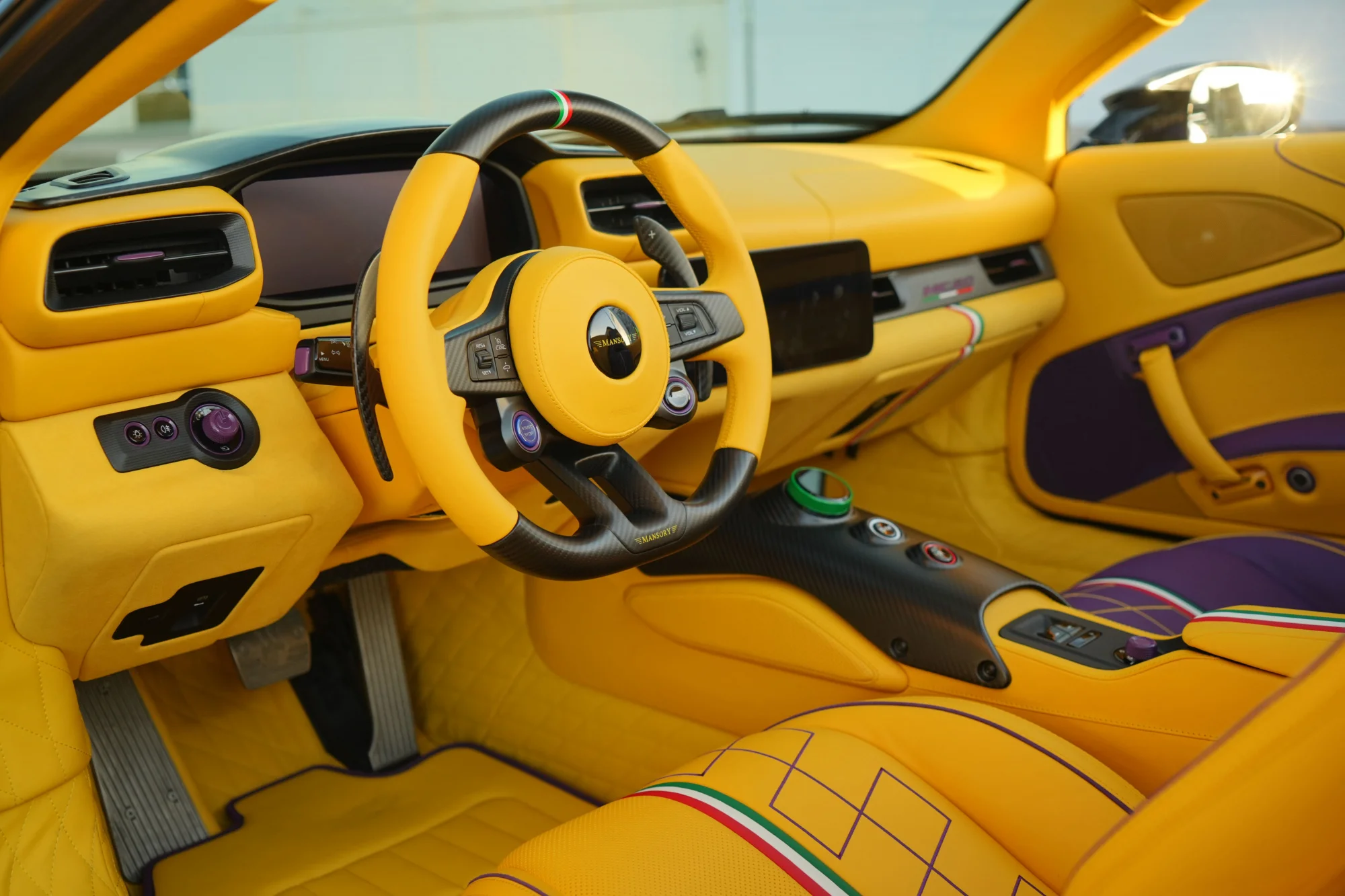
An interior modification can support vehicle value preservation when it respects factory design, avoids irreversible changes, protects original components, and leaves safety-related systems untouched unless the work has been properly reviewed. It cannot guarantee a higher resale price. For luxury, sports, supercar, and collector vehicles in the UAE, the decision begins before samples are placed on a seat: assess Dubai heat and UV exposure, confirm the installation method, record every removed component, and request evidence for material and safety statements. Appearance counts. Originality often counts more.
Vehicle value preservation is the process of reducing avoidable damage to originality, condition records, and future restoration options.
A tasteful cabin isn't automatically a value-preserving cabin. A factory steering wheel retrimmed without cutting its structure may be easier to defend than a replacement wheel with unknown wiring or airbag compatibility. The visual result may look similar. The ownership risk isn't.
Scope of an interior order that protects vehicle value
A value-preserving interior order improves comfort, protection, or presentation without making future restoration unnecessarily difficult. It should create a clear record of the vehicle's original condition, the materials used, the installation method, and the location of removed original components.
Interior work can range from a small trim repair to Full Interior Reupholstery, a complete rebuild covering seats, door panels, steering wheel, headliner, and trim. The scope may also include door panels, seats, the central console, and dashboard. These aren't interchangeable areas. A dashboard top and a removable floor mat don't carry the same risk.
The closest review is needed where a change touches factory identification, safety equipment, or difficult-to-replace materials:
- Steering wheels, especially where airbags, controls, or heating functions are present.
- Seats with integrated airbags, occupancy sensors, motors, and memory controls.
- Dashboards and centre consoles containing displays, wiring, switches, or rare trim.
- Door panels with airbag zones, speakers, ambient lighting, and factory fasteners.
- Headliners and pillars located near curtain airbags.
- Heritage interiors with original leather, wood, stitching patterns, or limited-production trim.
Interior modification refers to a planned change to cabin materials, surfaces, comfort features, or acoustic treatment. It does not automatically mean that a vehicle has been permanently altered.
Soundproofing needs separate scrutiny. Complete car interior soundproofing may involve the roof, floor, trunk, wheel arches, rear fenders, doors, trunk lid, and hood insulation. Materials are often fitted in layers for vibration insulation, sound insulation, sound absorption, and anti-squeak treatment.
That layering can improve comfort. It also means more trim removal, more factory clips, and more concealed areas that should be photographed before work starts.
Treat any change as permanent if it cannot be reversed without cutting, drilling, reshaping, or replacing a factory part. A new colour is easy to enjoy. Explaining a missing factory dashboard years later is less pleasant.
How Dubai climate affects interior materials
Dubai climate changes the material decision because heat and UV exposure are separate stresses. High cabin temperatures can affect surface feel, adhesion, odour, shape retention, and colour stability. UV exposure can fade dyes, dry out leather, weaken coatings, and accelerate cracking in poorly specified surfaces.
A car parked outdoors faces a different material load from one stored under cover. Covered parking reduces direct sun exposure. Climate-controlled storage reduces repeated heat cycling. Daily road use adds dust, repeated hand contact, and abrupt temperature changes when air conditioning begins.
Material selection should follow the car's real routine, not its ideal routine. A weekend car kept indoors can tolerate a different maintenance plan from a vehicle left outside during working hours.
Heat affects adhesive-backed products through softening and loss of bond. UV affects exposed surfaces through gradual colour loss and degradation of protective coatings. The issues overlap, but they aren't identical.
A wrap can look stable in its first weeks and still lift at the edges after repeated heat exposure. That often comes down to preparation, adhesive selection, or the surface beneath it. The problem is rarely visible in a showroom photo.
Complete interior soundproofing is commonly positioned as an acoustic and thermal treatment because layered materials can reduce noise and add thermal insulation within the cabin. That benefit should not override access requirements for wiring, drainage points, service panels, or factory clips.
What evidence should support a material statement?
Don't accept "UV-resistant" or "heat-resistant" as a verbal promise. Ask the installer or supplier for the product name, manufacturer, technical sheet, care instructions, colour reference, and intended application.
The owner should also ask whether the proposed material suits the exact surface. A seat bolster, dashboard top, and floor mat face different contact, heat, abrasion, and cleaning conditions. Treating them as one category is like buying one pair of shoes for a boardroom, a beach, and a racetrack. It can be done. It rarely ends well.
UV resistance is a material's ability to retain its intended properties when exposed to ultraviolet radiation. It does not mean that a surface will never fade or age.
Interior materials for Dubai heat and UV exposure
For Dubai use, material selection should be based on UV resistance, heat resistance, grip, water repellency, cleaning needs, and available documentation. Visual texture alone reveals very little about how a surface will age.
A water-repellent coating and a textured surface solve different problems. A coating can make spill cleanup easier. A naturally textured material can improve grip without relying on a treatment layer. The first depends on the coating remaining intact. The second depends on the material structure itself.
Anti-slip surfaces matter where feet, hands, or luggage create repeated contact. Floor areas, seat-entry points, and selected console surfaces can benefit from grip. The material must not interfere with pedal movement, controls, or normal cleaning.
Water-repellent finishes can reduce staining from spills. They don't make the cabin waterproof. Liquids can still enter seams, switches, perforations, and electronic areas.
Small installation errors can create significant repair costs when they damage trim, wiring, or safety-related components.
For leather heritage care, a programme such as LEATHER MASTERS may be relevant where the owner wants to preserve existing material rather than replace it. The right approach depends on leather condition, previous repairs, and whether the original finish can remain.
The mistake hidden behind "premium material"
"Premium" is a price position, not a technical property. It doesn't prove UV resistance, heat resistance, fire behaviour, colour stability, or dashboard suitability. A material may look expensive under workshop lighting and still age badly under sustained sun and heat.
Material choice affects future condition because unsuitable coatings can harden, fade, or release from the substrate. Poor adhesion can leave residue during removal. Request evidence before approval and keep it with the vehicle file.
A product name without a technical sheet is only a label. It isn't proof of suitability for a Dubai dashboard, seat bolster, or floor area.
Reversibility and preservation of original components
A reversible modification is a change that can be removed and the vehicle restored without avoidable damage to factory parts, wiring, mounting points, or finishes. It is reversible only when the installer can explain the removal and restoration method before work begins.
Non-destructive installation is an installation method that avoids cutting, drilling, grinding, or permanently bonding factory components unless the owner has approved that alteration in writing.
The word "removable" needs scrutiny. A trim overlay may technically come off, yet removal can damage the factory finish if aggressive adhesive, heat, or poor preparation was used. A seat cover may be removable, but not if its installation obstructs an airbag seam or damages the original upholstery underneath.
The distinction matters because a reversible modification protects future options. A part can be removed from the car and still leave the car worse than before. That is not the same thing as restoration.
Installation methods that need closer scrutiny
Ask for a written description of how each component will be attached. Pay special attention to:
- Drilling into dashboards, consoles, door cards, or structural seat parts.
- Cutting factory wiring or adding unprotected electrical connections.
- Using permanent adhesive on leather, wood, carbon fibre, or painted trim.
- Modifying airbag covers, seat seams, headliners, or pillar trims.
- Trimming factory clips, tabs, or mounting points to force-fit a new part.
- Removing original badges, plaques, serial labels, or vehicle-specific trim.
Photograph the cabin before disassembly. Include wide views, close-ups of existing wear, and images of factory labels or unusual trim. The record distinguishes pre-existing marks from handling damage.
That protects the owner and the installer. No mystery, no argument later.
Original-component inventory checklist
Before the installer removes anything, approve an inventory process:
- Photograph each original component before removal.
- Record the part description, condition, and vehicle location.
- Label the component and its related fasteners as one set.
- Pack trim pieces to prevent scratches, pressure marks, and moisture exposure.
- Store parts away from direct sun, excessive heat, and damp conditions.
- Confirm who holds the inventory and how the owner can inspect it.
- Obtain the inventory at vehicle delivery, even if parts remain in storage.
Original components are not "old parts." They are evidence of factory specification and a route back to it. For a collector vehicle, a labelled steering wheel, seat trim set, or console insert may matter long after a current design trend has passed.
Safety, certification, and compliance checks
Cosmetic cabin changes need different scrutiny from modifications affecting safety-related systems. A replaceable floor mat isn't in the same category as a seat retrim involving side airbags, sensor wiring, seatbelt mounts, or occupancy detection.
Safety-related work should pause until the installer provides current information about the proposed method, relevant material certification, and applicable UAE or GCC requirements. Material documentation and approval for a vehicle modification are different things.
Material certification is documented evidence about a material's stated properties, origin, testing, or conformity. It does not by itself confirm that an installed vehicle modification is approved for every vehicle or road-use situation.
GCC/ESMA documentation refers to relevant GCC or UAE conformity evidence that may be requested for a product or component. It should never be treated as automatic permission for a specific modification. Ask what the document covers, which product version it identifies, and whether further checks apply.
A material can have conformity documentation while the installation method remains unsuitable for the vehicle. The document follows the product. It doesn't automatically follow the finished car.
Changes that require a written safety review
Request a written explanation before authorising work that affects:
- Seats, seat rails, seatbelt anchors, or child-seat mounting points.
- Steering wheels, airbags, horn systems, paddles, or multifunction controls.
- Dashboard panels, airbags, warning lights, displays, or driver visibility.
- Door trims, pillar trims, headliners, and curtain-airbag zones.
- Electrical wiring, lighting, audio systems, cameras, or charging points.
- Pedal areas, floor mats, or driver footwell clearance.
Why ask before work starts? Because safety verification can affect project timing, material availability, installation steps, and cost. It is easier to choose another method before a dashboard is opened than after wiring has been altered.
Request copies or references for material conformity documentation, product identification, installer scope, and any information the installer relies on for legality or safety. Keep the final invoice, photographs, and work description with the vehicle records.
How to compare interior installers in the UAE
A suitable installer should be assessed by its process, relevant portfolio, material documentation, and handling of original components, not by a social-media reveal.
DEIZ GARAGE describes itself as a Dubai workshop for luxury, sports, and high-performance vehicles. It also states that it does not outsource to contractors, with work kept under one roof. That model can make responsibility easier to follow. Still, an owner should ask who performs each stage and who signs off on finished work.
A clear process can be structured as:
- Inspection and diagnostics.
- Clear scope, estimate, and timeline.
- Production, installation, and finishing.
- Quality control and delivery briefing.
The sequence matters. Condition recording establishes the starting point. The delivery briefing determines what the owner receives at the end, including care guidance, records, and an opportunity to inspect the work.
| Evaluation criterion | What the owner should check | Evidence that makes the answer useful | Red flag |
|---|---|---|---|
| Relevant experience | Comparable luxury, sports, supercar, or collector interiors | Portfolio showing the same type of work and materials | Only generic finished-car images |
| Technician capability | Who handles trim, wiring, upholstery, and disassembly | Named team roles and controlled workshop process | No clear answer on who performs the work |
| Material traceability | Exact material and supplier identity | Product name, sample, technical data, care notes | "Premium" without a product reference |
| Original-component handling | Inventory and storage procedure | Labels, photographs, packing method, handover record | Removed parts treated as disposable |
| Customer reviews | Reviews describing similar interior work | Details about fitment, communication, records, and aftercare | Reviews focused only on speed or price |
| Warranty terms | What is covered and what is excluded | Written terms tied to materials and workmanship | Broad verbal assurances |
| Project documentation | Scope, condition record, changes, and final photos | Written estimate and signed work description | Vague package name with no detail |
Reviews help when they describe work similar to yours. A five-star note about a wash says little about seat disassembly, headliner work, or a dashboard retrim. Context beats volume.
Ask to see the type of work you are buying. A gallery of glossy finished cars may show presentation. It doesn't show how original components were handled behind the trim.
Questions to ask before approving the interior order
Approve the interior order only after the installer answers material, installation, original-part, and safety questions in writing. The list can be sent by email or attached to the quotation.
Pre-order questions for the installer
- What are the exact manufacturer and product names for every visible material?
- What evidence supports the UV resistance and heat resistance statements?
- How will the material behave on this particular surface in Dubai heat?
- Will any factory part be drilled, cut, sanded, permanently bonded, or modified?
- Which original components will be removed, and how will they be photographed, labelled, packed, and stored?
- Can the proposed work be reversed without replacing factory parts?
- Does any step affect airbags, seat systems, seatbelts, wiring, pedals, visibility, or controls?
- What material certification or GCC/ESMA documentation is available, and what does it actually cover?
- Who performs the work, and is any part of it outsourced?
- What is the written scope, estimate, and timeline?
- What happens during quality control and the delivery briefing?
- What records will the owner receive after installation?
Ask about pricing with the same discipline. DEIZ GARAGE prices are described as ladders by vehicle class rather than single figures. No vehicle-class labels are stated alongside the published figures, so they should not be treated as a price ladder. For custom projects, request a vehicle-class-specific written estimate rather than relying on a published starting figure.
A written estimate should identify the applicable vehicle class, material choice, disassembly requirements, and documentation process. Those details can change what the project involves.
The lowest figure is rarely decisive. A cheaper quote that omits parts storage, material identification, or safety checks doesn't describe the same project.
Final comparison table: choosing the lowest-risk interior approach
When originality is a priority, reversibility should override visual preference. The most striking finish isn't automatically the best choice if restoring the factory interior later would require replacement parts or visible repair.
| Interior approach | Reversibility | Dubai climate suitability | Impact on original components | Safety and certification scrutiny | Installer documentation needed |
|---|---|---|---|---|---|
| Cleaning, heritage care, and minor restoration | Usually high when factory materials remain | Depends on approved care products and storage conditions | Low if no parts are removed | Low unless safety areas are involved | Condition photos, product details, care record |
| Removable protective surface treatment | Varies with substrate and removal method | Check heat and UV behaviour of the treatment | Low to moderate | Moderate if used near controls, airbags, or visibility areas | Product data, preparation method, removal plan |
| Replaceable mats or non-structural accessories | Often high if correctly fitted | Check anti-slip and heat stability | Low if factory mounting points remain untouched | Moderate in pedal and driver-footwell areas | Fitment method, material information, removal method |
| Partial retrim of a removable component | Moderate to high when original component is retained | Material selection needs heat and UV evidence | Moderate because trim is removed | High for steering wheels, seats, and airbag areas | Before photos, material record, restoration plan |
| Full Interior Reupholstery | Varies by disassembly and attachment method | Requires documented material selection for each zone | High because many factory components are handled | High where seats, airbags, wiring, or controls are involved | Full inventory, installation scope, safety review, final record |
| Complete interior soundproofing | Often difficult to reverse without extensive labour | Check adhesive and layer stability in heat | High due to widespread trim removal | Moderate to high around wiring, airbags, and access panels | Layer map, part inventory, installation photos, service-access plan |
A full retrim can suit a car intended for long-term personal use. A preservation-focused owner may prefer targeted restoration, removable protection, or a limited change that retains more of the factory cabin. Different ownership plans, different answer.
The record matters.
What to expect before booking
Before booking, expect an inspection and diagnostics stage followed by a written scope, estimate, and timeline. The scope should identify the proposed materials, installation method, parts to be removed, and any safety-related areas requiring review.
Request material documentation before approval, including product identity, technical information, care instructions, and any available conformity evidence. If original components will be removed, agree on photographs, labels, inventory records, packing, storage, and handover arrangements before disassembly begins.
Where seats, airbags, seatbelts, steering controls, wiring, pedal areas, or visibility may be affected, ask for a written safety review before work starts. At delivery, collect the final work description, quality-control record, material details, photographs, and original-component inventory.
FAQ
What should owners check before ordering an interior modification?
What should owners check before ordering an interior modification in Dubai?
Check UV resistance, heat resistance, grip where relevant, water behaviour, care requirements, installation method, and documentation. Record the car's original condition before any disassembly begins.
How can an owner tell whether an interior change is reversible?
A change is reversible only if the installer can explain removal and restoration without cutting, drilling, permanent bonding, or replacing original components.
What should happen to removed original components?
They should be photographed, labelled by location, packed with related fasteners, inventoried, and stored away from heat, sunlight, moisture, and pressure damage.
Which installer records should be requested?
Request the written scope, material identification, condition photographs, original-component inventory, installation method, safety-related notes, quality-control record, and delivery briefing details.
When is a safety or conformity check required?
Request a check before work begins if the modification may affect airbags, seats, seatbelts, steering wheels, controls, visibility, wiring, pedal areas, or other safety-related systems.
Does material certification prove that a modification is legal?
No. Material certification can support statements about the material itself. It does not automatically confirm that the completed vehicle modification is approved or suitable for every vehicle.
